
Latest update: July 2026
Google still dominates search, but as the line between traditional and AI search blurs, the role of digital PR is expanding.
This change is largely thanks to where AI systems source information and how they choose who to trust. They draw on the coverage, mentions, research, and third-party references already circulating about that brand across the internet.
That is exactly what digital PR is built to create.
This piece covers why companies are still turning to digital PR, what the latest research says about earning visibility in AI search, and the strategic shift that matters more than any formatting tactic: building evidence a brand can own, not just facts an AI can reproduce.
Key Takeaways
- Digital PR isn’t one thing. It’s online PR, link building, AI search PR, plus hybrid and integrated programs. Most combine more than one.
- The value of digital PR likes in the third-party authority it builds across media coverage, search rankings, brand discovery, and AI answers. The strongest programs start with topic ownership, not a deliverable
- AI visibility is shaped largely beyond the brand’s own website, according to 2026 research. Most brand appearances in AI answers come through third-party sources, not the brand’s own website.
- The biggest shift? Build evidence only your brand can own. Public-data campaigns still have value, but an interesting ranking is no longer enough. Proprietary data, recurring research, expert interpretation, and customer insights are harder for AI systems or competitors to reproduce without naming the source.
- Focus on the 10% that changes for AI search. Most of what works in SEO, PR, and content still applies. Make the evidence easier to find, understand, quote, and attribute, but keep the content human-first.
Five Ways Brands Use Digital PR in 2026
Before we dive into the whys, we wanted to define some of the ways.
The term digital PR, short for digital public relations, gets used loosely, which is part of why it is confusing.
The useful way to define digital PR in 2026 is not just “link building with a media list.”
DIGITAL PR, DEFINED
Digital PR is the practice of creating and distributing credible stories, expertise, research, and assets that help search engines, AI systems, journalists, and customers understand a brand’s authority.
Here are five different ways brands are employing digital PR today.
| The goal | Typical deliverables | How you measure it |
|---|---|---|
| Online PR and reputation building. Build reputation, awareness, and a credible media presence. | News announcements, expert commentary, reactive PR, founder profiles | Coverage, share of voice, sentiment, branded search |
| Hybrid PR: PR + digital PR. Pair reputation and relationships with campaigns that also earn links and rankings. | News, thought leadership, data studies, surveys, media relations | Coverage quality, reach, links, brand recognition |
| Integrated PR, AI, SEO, and content program. Decide which subjects the company should own, then reinforce that across every channel. | Editorial strategy, topic ownership, research programs, thought leadership, on-site content | Share of search, share of voice, AI visibility, links, demand |
| Get mentioned and recommended in AI answers. Improve AI mentions, inclusion in AI lists, and accurate representation in AI responses. | Expert citations, comparative lists, third-party mentions, stats pages, research | AI mentions, citations, recommendation share, sentiment |
| Link building for SEO. Land authoritative backlinks that lift organic rankings and traffic. | Data studies, rankings, interactive tools, maps, surveys | Links, referring domains, authority, rankings, organic traffic |
Most of our past work has lived in that last row, earning links that support organic search. It works, and it is not going away. But the market is moving up the list.
The hybrid and the integrated programs are where we do our strongest work and where we think digital PR is heading.
Neither starts with a deliverable. Not “we need ten links” or “we need a survey.” They start with a decision about which subjects a company should own, then reinforce that ownership everywhere at once: content, media coverage, search, links, and AI citations.
The hybrid is the one most clients underrate, and it is our most distinctive offering. It pairs traditional PR with SEO-focused digital PR in one service. Different categories, same idea: combine the reputation and relationship work of PR with the measurable, compounding assets of digital PR so they reinforce each other instead of competing.
What AI Search Rewards and Why Digital PR Delivers
Strip away the acronyms (AEO, GEO, AIO, and AI SEO all describe the same job, optimizing for AI answers) and the mechanism is simple.
When an answer engine decides which company to name, it is effectively asking:
- Which brands are consistently connected to this topic?
- Do independent, credible sources say the same things about them?
- Is there a fact, quote, statistic, or expert take it can lift and trust?
(We break down more details on AI answer optimization here.)
Every one of those bullets is a brand signal.
The fastest way we know how to build those signals at scale is digital PR.
Digital PR puts facts, statistics, expert interpretations, brand-owned research, named entities, and corroborating references onto the open web, where AI systems can discover, retrieve, and use them when forming answers.
Search Today: Studies and Stats for Digital PR in 2026
We rounded up some of the latest stats that help us understand the role of digital PR right now. Stats range from late 2025 through mid-2026.
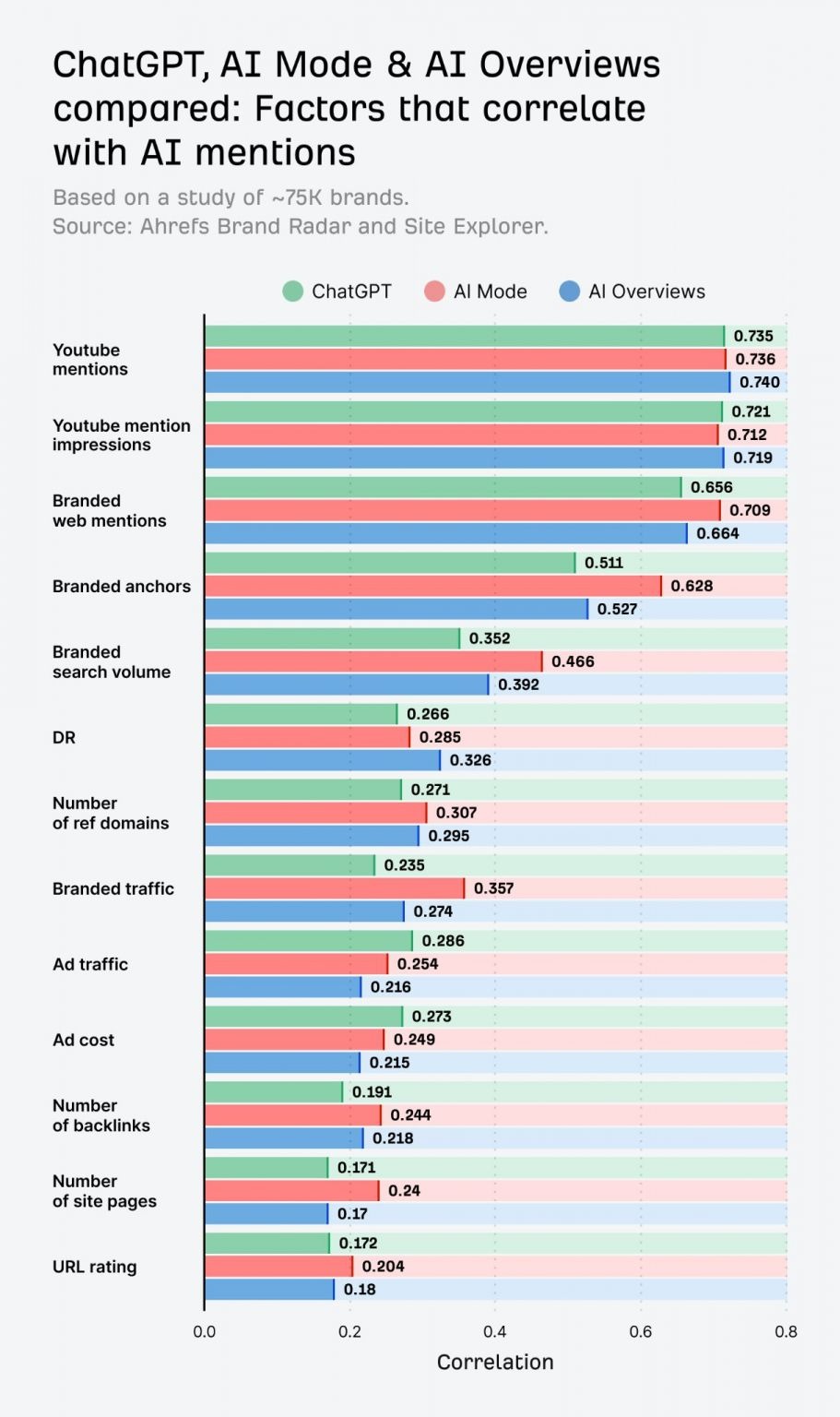
- Brand mentions beat backlinks; YouTube beats mentions. Ahrefs studied 75,000 brands, finding YouTube mentions and impressions have the strongest correlation with AI brand visibility. Branded web mentions, anchors, and search volume showed the next-highest correlation. (Ahrefs, December 2025)
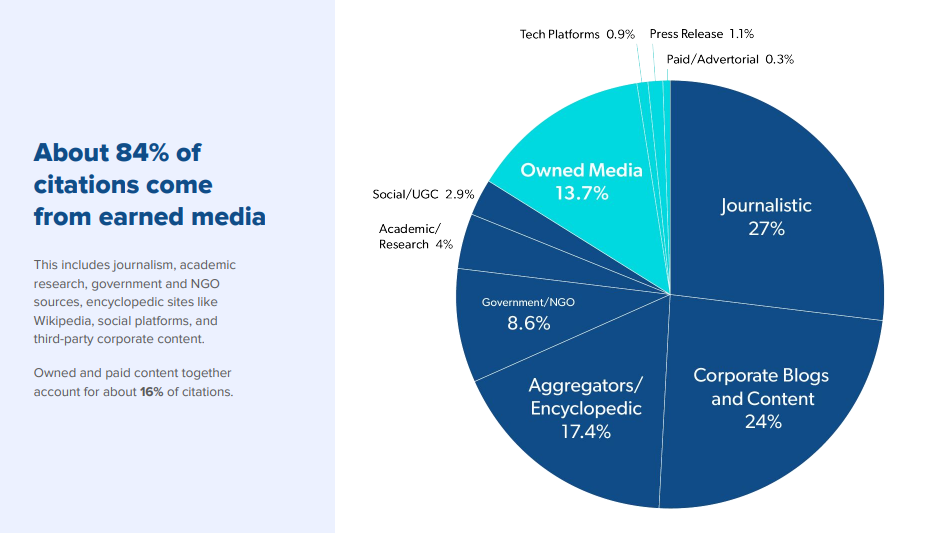
- AI mostly cites earned media. Across 25 million cited links, Muck Rack found 84% came from earned media and just 0.3% from paid or advertorial content. Journalism alone was 27%, and the split has held steady across three editions since July 2025. (Muck Rack, May 2026)
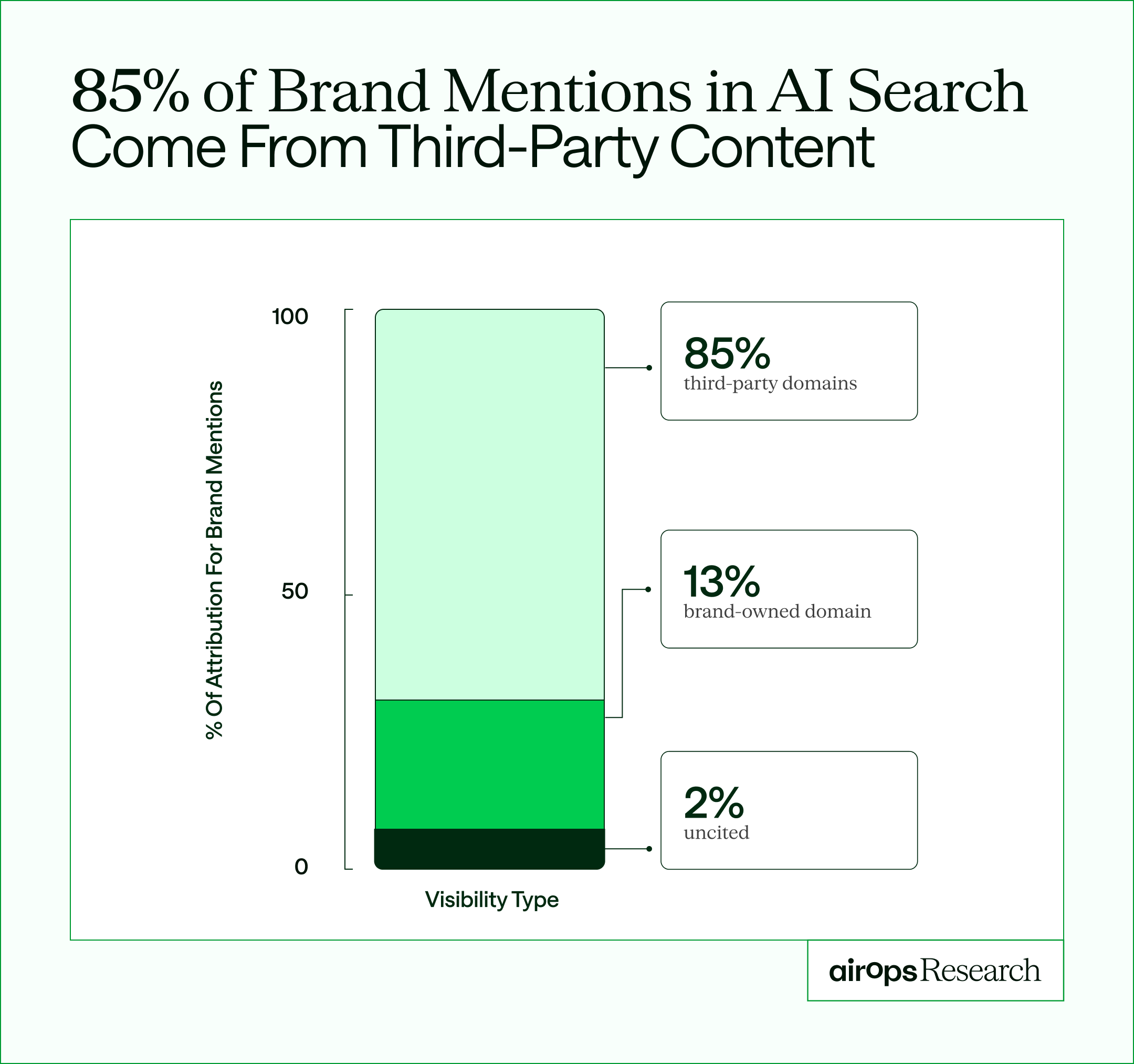
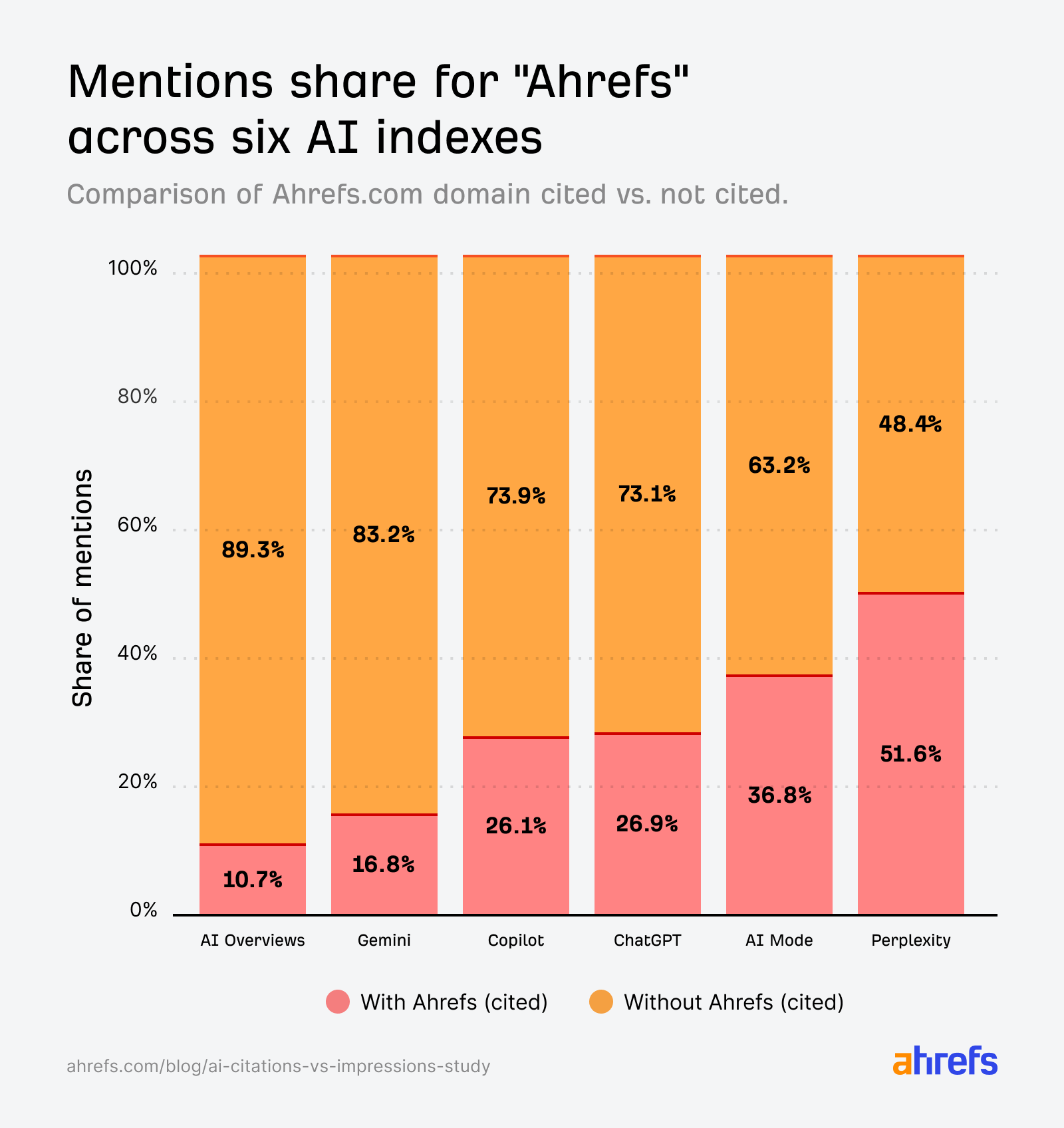
- Most of your AI mentions will not come from your own site. AirOps analyzed 21,311 brand mentions and found about 85% originated from third-party pages, not the brand’s domain, and found that for early commercial queries brands were 6.5 times more likely to surface through third-party content than through their own. Ahrefs saw the same in its own data in mid-2026, where up to 89% of its AI mentions came from other websites. (AirOps, 2026; Ahrefs, 2026)
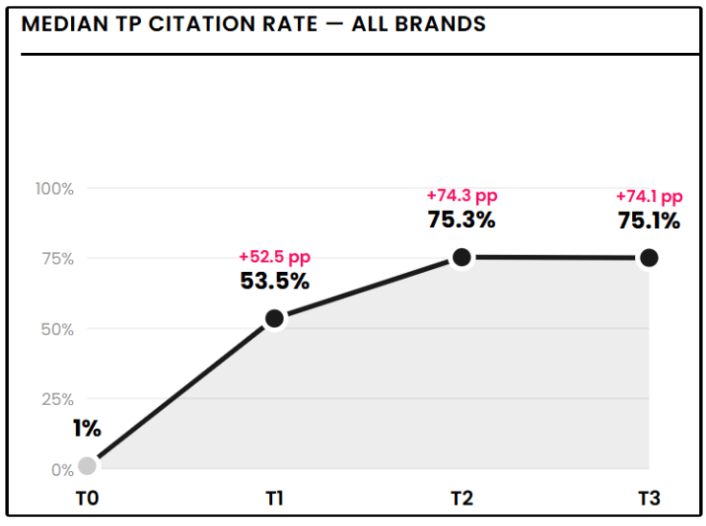
- Third-party review profiles move the needle. In a Seer Interactive and Trustpilot study, brands with a strong review profile were cited in about 75% of AI answers, versus roughly 1% for brands without one. (Seer Interactive, May 2026)
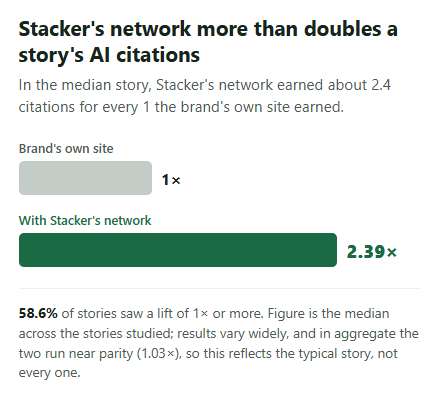
- Distribution multiplies reach. Stacker and Scrunch found that pushing content through third-party news outlets produced a median 239% lift in AI visibility, and higher in some cases. (Stacker, March 2026)
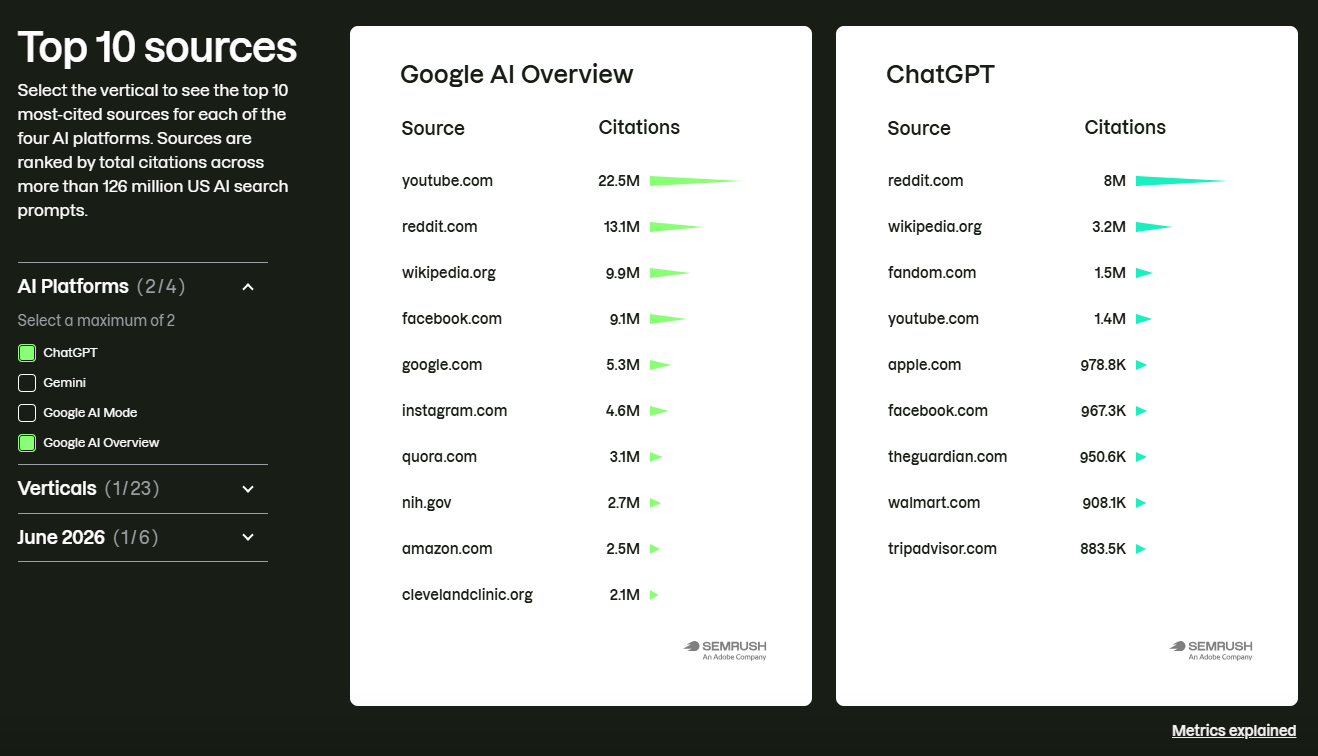
- The platforms do not agree with each other. They may favor similar source categories, such as journalism, reviews, and research, but they often cite different pages and surface different brands. Ahrefs found Google’s AI Overviews and AI Mode cite the same URLs only 13.7% of the time. Semrush’s index of 126 million prompts found similar divergence across ChatGPT, Gemini, and Google. (Ahrefs, December 2025; Semrush, June 2026)
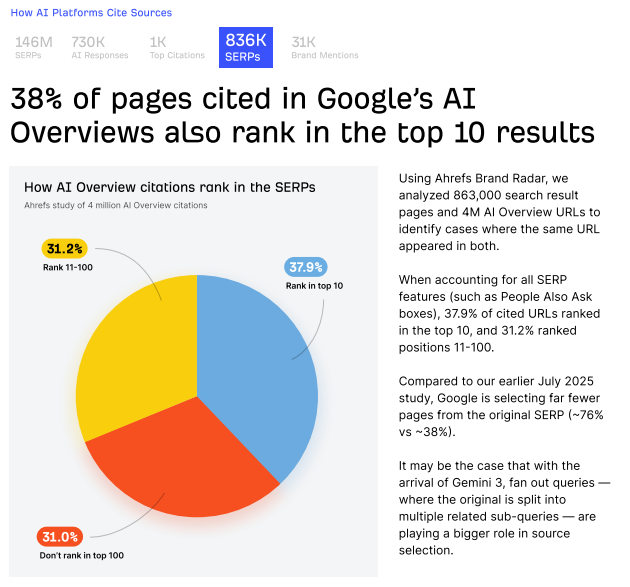
- Old rankings do not guarantee anything. Only about 38% of AI Overview citations come from Google’s organic top 10, down from 76% a year earlier. Ranking first no longer means you are in the answer. (Ahrefs, 2026)
As noted by Nick Leroy, “AI (and search) is learning who you are, how you’re talked about, and whether you’re trustworthy.” Brand mentions, backlinks, reviews, interviews, citations, comparisons, and other external references all contribute information about that company.
Building that wider footprint is exactly what digital PR is for.
The Shift That Matters Most? Own the Evidence
Here is the part most “optimize for AI” advice misses. Making your study easy for AI to quote does not help if the AI can produce the same answer without you.
We saw this firsthand when we re-ran the three ChatGPT queries from earlier editions of this article (the full results are below).
Digital PR studies still appeared for consumer and lifestyle questions, such as real estate and coffee. But for a more authoritative urban-planning query, government, academic, and industry sources dominated. One study from our first edition had disappeared, partly because its URL was no longer live.
The lesson is not that public-data campaigns no longer work. It is that they are easier to replace. If a model can reach the same finding through the original dataset or another publisher, the brand does not truly own the evidence. This was a limited ChatGPT test, not a universal rule, but it raises the standard for what deserves a campaign.
The old question was: Can we turn this dataset into a newsworthy ranking?
The better question is: Does this campaign create evidence that helps someone make a decision the brand wants to be recommended for?
A strong AI-era campaign should do at least two of these three things:
- Earn attention. Journalists and audiences care about it.
- Prove expertise. It reveals something the brand uniquely knows, sees, or can credibly interpret.
- Support recommendation. It helps answer a commercial or high-intent question where the brand has a legitimate reason to appear.
Traditional studies are usually excellent at the first and decent at the second. The next generation has to get much stronger at the third.
The winning formula is: original evidence, plus expert interpretation, plus earned third-party validation. Public data can still play a supporting role, but as context rather than the whole source of value.
Do Digital PR Campaigns Show Up in AI Search?
Do digital PR campaigns actually influence AI search answers? They do.
Using ChatGPT, we asked three different queries and examined the top sources cited in its answers. Here’s what we found.
Note: these are snapshots, not laws. AI answers are personalized and change constantly.
Which cities in California are building the most homes?
In digital PR we often see city studies focusing on real estate perform well. But do they inform AI search answers?
Top sources:
- gov: California Housing Dept., ca.gov, and Census.gov
- Local media: SFChronicle, LATimes, and Urbanize LA
- Digital PR: Consumer Affairs, PlainCities, and BackyardADU
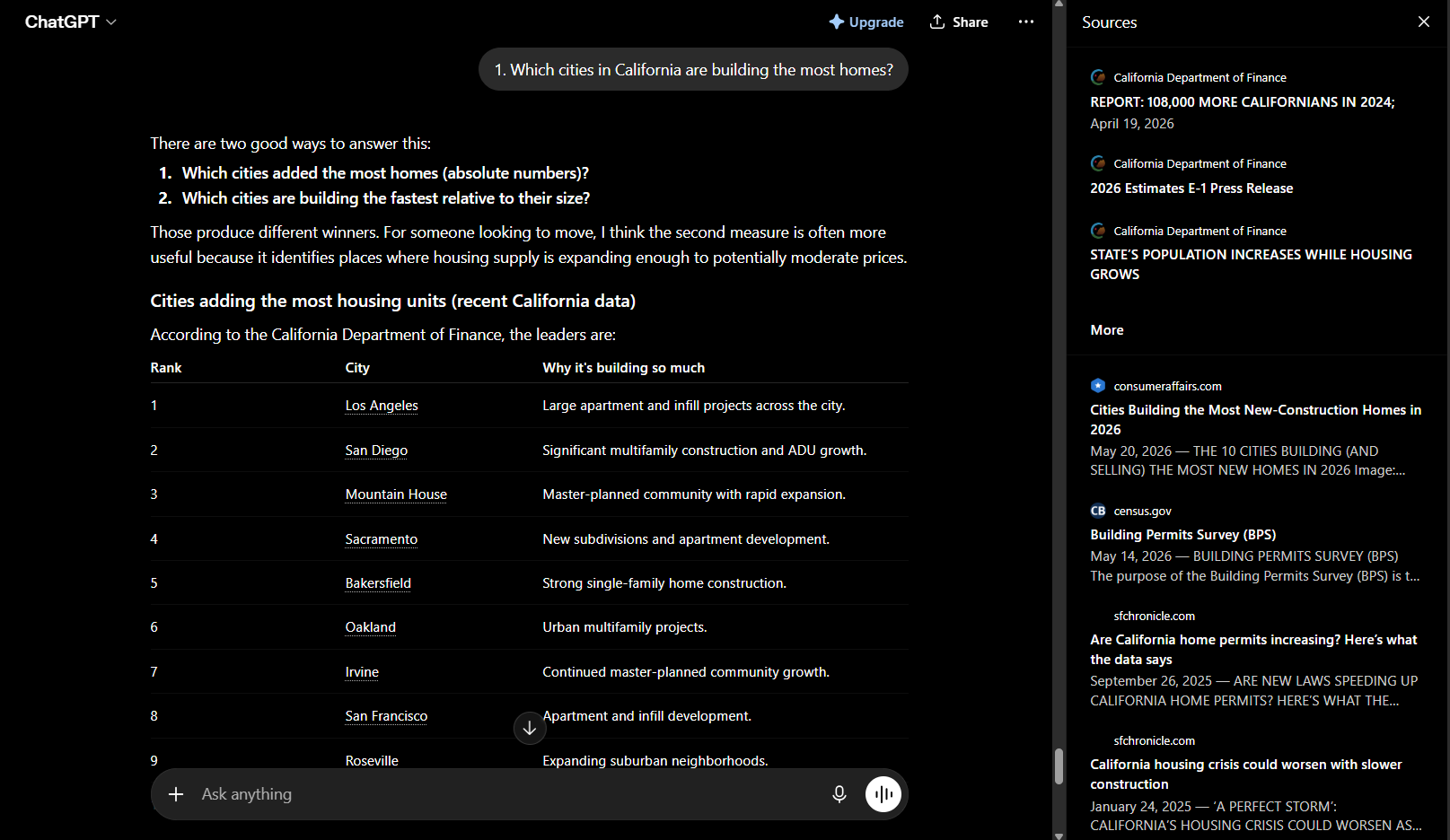
What this tells us? ChatGPT rewards localized data studies, specifically on real estate. Aim outreach at local and state outlets.
Which cities are best for coffee fanatics?
City studies highlighting the best places for different lifestyles, hobbies, or preferences are another type of digital PR campaign that historically earn media attention. Does ChatGPT take these campaigns into account?
Top sources:
- Aggregators: Yahoo Travel
- Travel media: Time Out Worldwide and Condé Nast Traveler
- Social: Reddit
- Digital PR: WalletHub (via Ladders), MyCoffeeExplorer, and Bakio
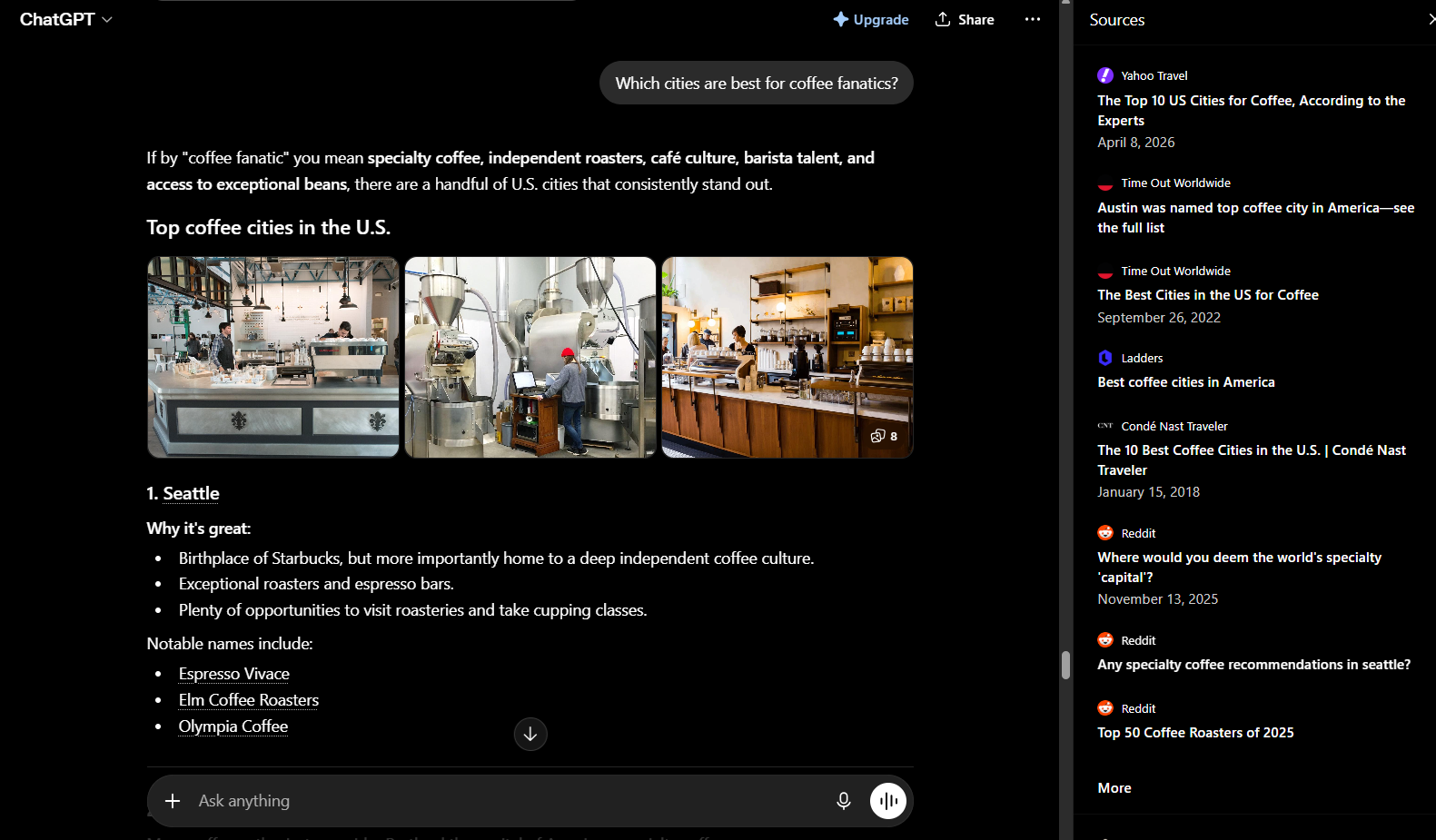
What this tells us? Listicles like the one from Condé Nast and coverage of digital PR campaigns by Wallethub get cited first. The WalletHub study may show up above the fold, but it is the data featured in outlets on the source list. Aim outreach to both national lifestyle and local outlets.
Are there any 15-minute cities in America?
Top sources:
- .org: Congress for the New Urbanism (CNU)
- .gov: EPA
- Research: PubMed
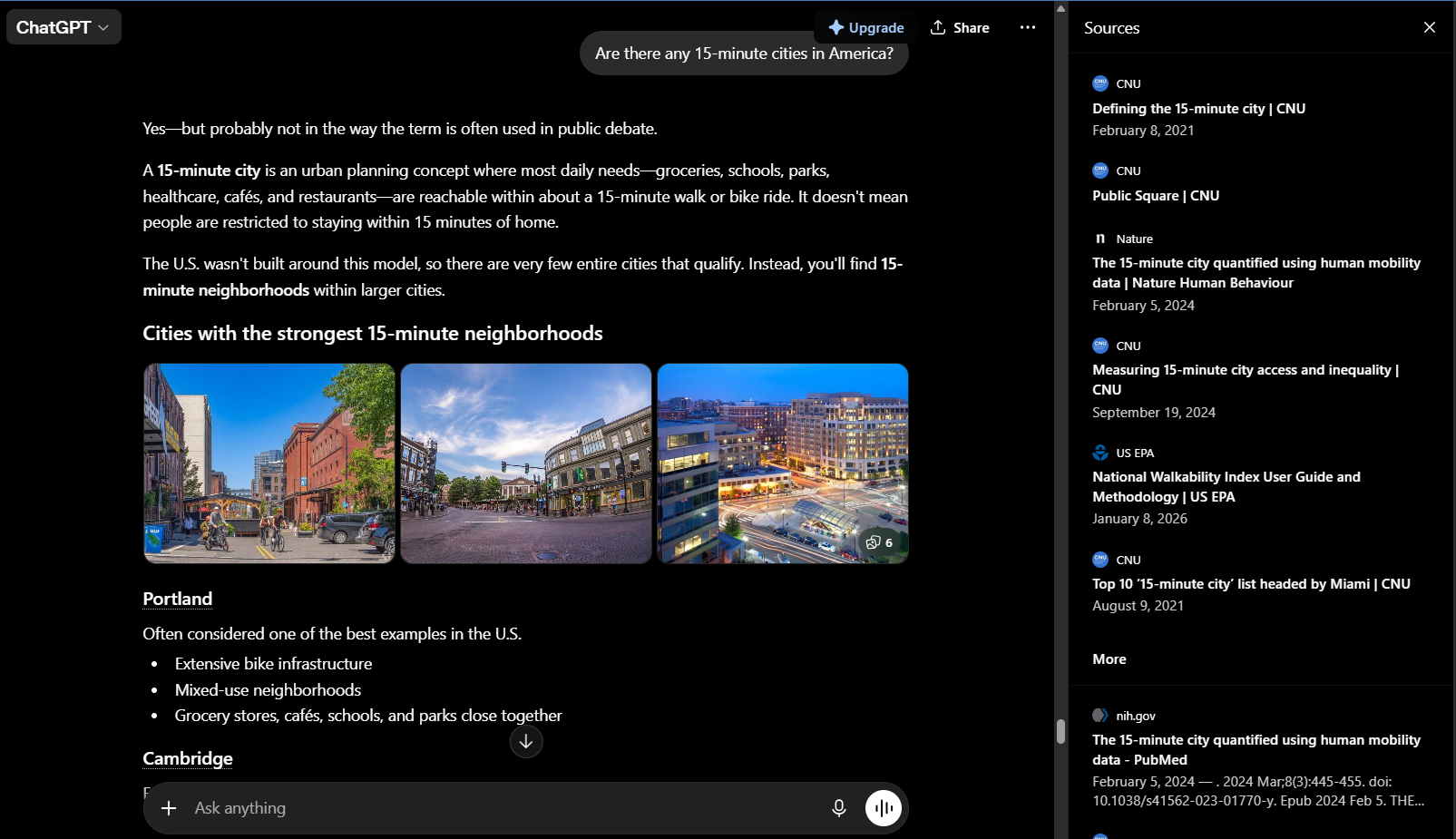
What this tells us? The best sources are peer-reviewed studies, government datasets, and established urban planning organizations. Rather than declaring “the best” 15-minute cities, they measure objective factors like walkability, access to daily needs, and land-use patterns, leaving readers to interpret which places perform best.
What changed: In our first edition of research on this topic, there was a digital PR study in the results for 15-minute cities. However, now that study isn’t shown because it is no longer a live URL.
Which Digital PR Formats Work Best in 2026?
Some formats or digital PR frameworks naturally create clear, quotable, reusable information. All of them get stronger when they produce evidence you own.
City or state rankings and indexes
What is it? A data study resulting in a list of cities or states that are ranked, often across scored factors. Often includes maps, charts, and infographics to make the findings easy to understand.
Why it works for AEO?It creates structured, attributable findings that answer engines can quote, and it converts cleanly into the ranked “best of” format, one of the most-cited content types in AI answers.
Limitation: When a ranking is built entirely from public data, an AI system or competitor may be able to reproduce it without citing the brand.
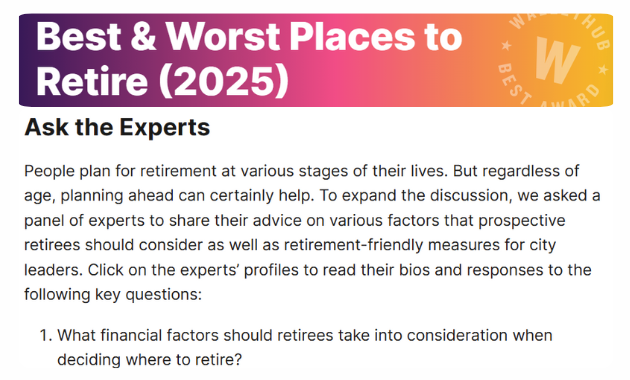
AEO upgrade: Give each featured city or state a question-and-answer block. Ex: Why does {city} rank #1 best for retirement? Compare it to the national average and, if this is an updated post, note what changed since last year. Layer in proprietary or expert input so the ranking is not pure public data, and aim to appear in the lists other people publish.
Example: The master of this format, WalletHub, goes an extra step and combines the Q&A format with expert commentary, like in their report on the Best & Worst Places to Retire.
Proprietary Data Studies
What is it? An analysis of data the brand owns, from customer behavior, product usage, search-tool data, transaction trends, or a survey of your market.
Why it works for AEO? The brand is the source, so any accurate citation has to name you. It is the most defensible format in AI answers, because no one can rerun it without your data.
Limitation: The finding is only as strong as the data behind it. If the dataset is not genuinely unique, or the methodology is not transparent enough to trust, the study can be discounted or waved off as self-serving.
AEO upgrade: Attribute the finding clearly, publish the methodology, offer a download, and name your measure so citations carry your brand.
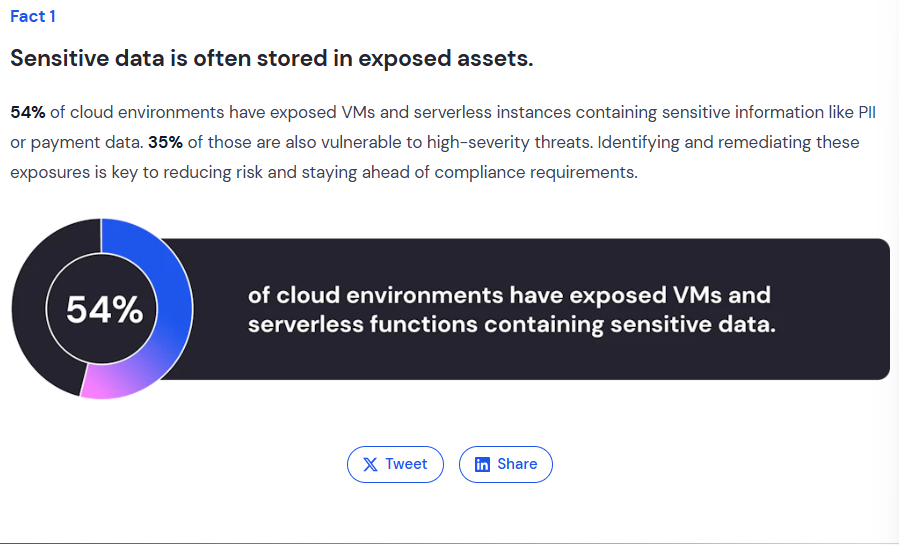
Example: Wiz packages proprietary research into short, quotable fact blocks with a clear download.
Surveys
What is it? New statistics about attitudes, preferences, or behavior, collected by you.
Why it works for AEO? Surveys create fresh, ownable stats, and fresh data is exactly what answer engines reward.
Limitation: A thin or unrepresentative sample undercuts the result, and any competitor can commission a similar poll, so a survey is easier to reproduce than first-party behavioral data.
AEO upgrade: Lead each section with the finding, then show who was surveyed, when, how many responded, and what the result does and does not prove.
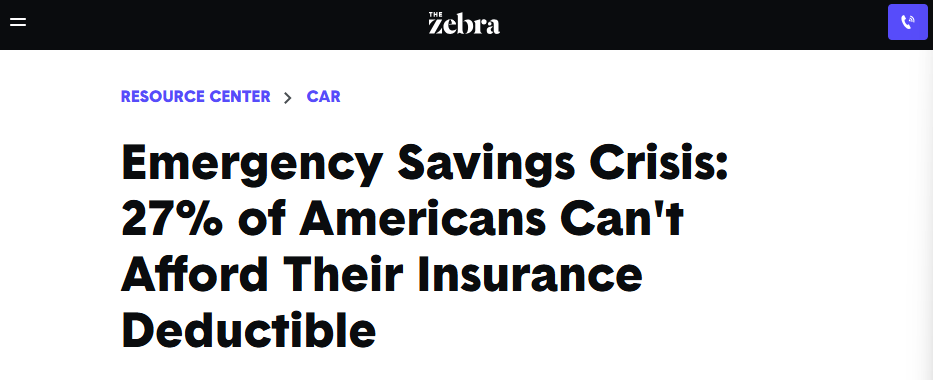
Example: The Zebra presents their survey findings like headlines, leading with the strongest stat as the title text and each header calling out headline-worthy stats, too.
Recurring Reports
What is it? An annual or quarterly analysis of a topic measured on a regular schedule.
Why it works for AEO? It gives you a repeatable claim to a subject plus a clean, comparable time series AI systems like, and it makes you the source journalists return to whenever the topic moves.
Limitation: The value only compounds if you sustain the cadence and hold the methodology steady. A skipped edition or a changed method breaks the time series and the authority that comes with it.
AEO upgrade: Keep terminology consistent across editions, label your HTML tables, timestamp everything, and summarize what changed since the last release.
Example: Clio’s Legal Trends Report has run since 2016, with a tidy archive of machine-readable tables.
Live cost, price, or data tracker
What is it? A continuously updated dataset, often paired with an interactive map or table.
Why it works for AEO? When consistently maintained, the data stays fresh. The newest answers often provide the best answers to searches, so this type of content is gold. A live tool also resists summarization, so it keeps earning the click.
Limitation: A tracker is only as good as its last update, and if the underlying feed is public, a competitor can create their own rival tracker.
AEO upgrade: Name your figure so citations carry the brand, and describe the number the same way across your site, media, and social to build consensus.
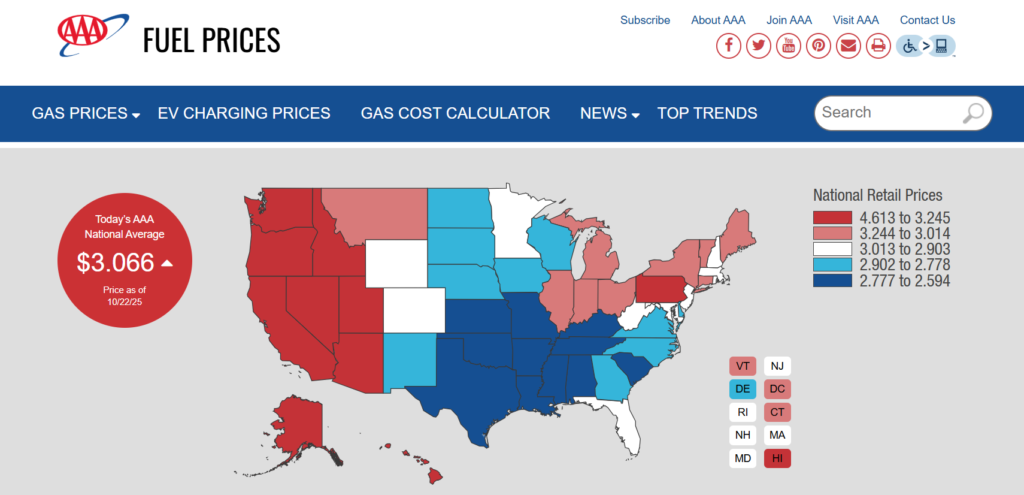
Example: AAA calls its figure the “AAA National Average,” which pulls the brand into every citation of the number.
Expert Commentary
What is it? Named experts reacting to news, explaining complex topics, or offering a contrarian take, no dataset required.
Why it works for AEO? It connects real people to the subjects you want to own and builds the experience and authority signals AI systems weigh.
Limitation: It hinges on a real person’s availability and consistency, is harder to scale or measure than a data asset, and the authority fades if that expert goes quiet or leaves.
AEO upgrade: Put the expert’s name, title, and a quotable line in the coverage, and keep the same person attached to the same topic over time.
Example: A founder or in-house specialist who comments on the same beat consistently can build relationships with journalists and become the name both media and AI systems attach to that subject.
Stats page
What is it? A single well-sourced hub gathering the important numbers on one topic.
Why it works for AEO? It concentrates information in one place and combines data with context.
Limitation: A page that mostly aggregates other people’s numbers is easy for AI to bypass in favor of the original sources. Without original research or interpretation, it never becomes an ownable reference.
AEO upgrade: Add original research, a plain-English summary line under each stat, expert interpretation, and a “what changed” note, then keep it updated.
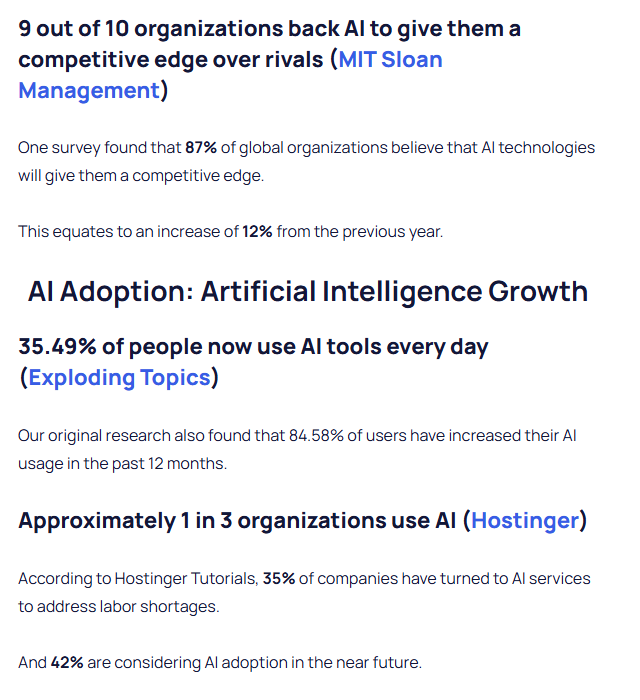
Example: Exploding Topics curates stat pages that are clean, well-edited, and built with AI extraction in mind.
How AEO Changes the Game for Digital PR
We have not stopped running public-data campaigns. Many still produce excellent insights, authoritative links, and original local stories. But we have raised the bar for which ideas become campaigns.
A ranking is no longer strong just because the data exists and the headline is interesting. Before we greenlight an idea, we ask:
- Does the finding show something the client uniquely understands?
- Does it strengthen the client’s connection to a commercially relevant topic?
- Does it create evidence journalists, customers, and AI systems cannot fully reproduce without the brand?
- Does it help answer a question the client’s target audience asks when deciding whom to compare, trust, or choose?
- Can it become a recurring source of authority instead of a one-time story?
The point is to make sure the authority a campaign earns supports the authority the company actually needs.
The 10% Shift You Can’t Ignore
Most of what worked still works. Content creation should remain people-first: serve the reader before the machine.
From what we have seen, roughly 90% of good SEO and PR practice carries straight over. The other 10% is where AI search changes the game, and it is worth getting right:
- Liftable answers: Put a direct answer near the top of each section and state important statistics in clear, self-contained sentences that AI systems can easily interpret and quote. Key takeaways are a great place to do this, and after every H2.
- E-E-A-T: Experience, Expertise, Authority, and Trustworthiness. Use one-of-a-kind examples, thought leadership, case studies, editorial tidbits, and tips only you can share within pieces that emphasize brand.
- Brand + Topic: The PR team, SEO team, and content team should reinforce the same priority subjects using clear, consistent language across coverage, expert commentary, on-site content, and distribution.
- Keep it fresh: AI likes newness. Always include the latest timestamp to showcase how up-to-date your data is. Go one step further and ensure schema markup with datePublished and dateModified are updated too.
- Own the data: I repeat. Own. The. Data. Share the data. Tell everyone about your data. But tell everyone it is YOUR data. Why? Because anyone who talks about it will have to talk about you.
- Show the data: Clean it up. Pop it in an HTML table. Share a CSV download. Include a timestamp. Compare to past data. Repeat.
- Question & Answer: Question-led headings and Q&A sections can make information easier for readers and answer engines to navigate, especially when the answers are direct and evidence-led.
How to Measure Digital PR Across Search and AI
How do you measure that, especially with ever-evolving algorithms?
Start by tracking brand presence. Companies like Profound and Ahrefs provide tools to monitor citations, mentions, and visibility across answer engines.
Since the landscape is new, measure various metrics more frequently. Track, learn, adjust, repeat. Whether the work is handled in-house or by a digital PR agency, the metrics should follow the job the program was designed to do.
- SEO goal: authoritative backlinks, relevant referring domains, ranking movement, organic and referral traffic.
- Brand goal: relevant placements, media mentions, reach, share of voice, branded search, sentiment.
- AI visibility goal: mention rate, citation rate, share of answers, recommendation position, accuracy, sentiment, which sources appear alongside you, and how all of that differs across ChatGPT, Google, Gemini, and Perplexity.
- Integrated goal: whether media, search, branded demand, and AI visibility are all improving around the same priority topics.
The individual metrics matter, but the strongest signal is alignment. The program is working when the brand becomes easier to find, more frequently referenced, and more strongly associated with the subjects it wants to own.
The Future of Digital PR Is Building Evidence AI Can Trust
As AI grows, the need for brands to be more intentional and human grows, especially when it comes to online presence.
A proven way to demonstrate that authority is through digital PR: producing original evidence, expert interpretation, useful tools, research, and commentary that connect human stories with credible information.
They don’t need to be viral. They never really did. What matters is a steady body of answer-first, evidence-led work that earns attention from the right publishers, platforms, and online communities. Build the library, and answer engines will draw from it when people ask real questions.
And more and more people are asking every day. So that’s good news.
But make sure the digital PR you produce reinforces your part in a conversational world. Get out there and start sparking more conversations.
FAQs on Digital PR, SEO, and AI Search
How does digital PR improve search rankings beyond building backlinks?
Building links from relevant, authoritative websites remains one of digital PR’s clearest SEO benefits, but it is only part of the value.
Strong media coverage can also generate referral traffic, increase branded searches, attract additional links organically, and strengthen the association between a company and the subjects it wants to own. These signals can support the wider SEO strategy by helping important pages compete in the SERPs and making the brand more recognizable across search.
Domain authority can be a useful directional metric, but it should not be the sole measure of success. The relevance and quality of the coverage matter more than simply increasing the number of referring domains.
A campaign about an unrelated trending topic may earn links without strengthening the company’s real area of expertise. A better campaign earns high-authority coverage while reinforcing the products, services, or decisions for which the brand wants to be discovered.
What is a good digital PR campaign example for SEO and AI search?
A cybersecurity company might publish original data on the threats its platform detected during the past year, then offer journalists expert analysis of what changed and why.
That campaign could earn media coverage, links, podcast invitations, social media discussion, and citations in future articles or AI answers. The most useful digital PR examples begin with evidence or expertise the brand can credibly claim, rather than choosing a trending topic only because it may attract attention.
Can digital PR work without proprietary data?
Yes. Proprietary data is highly defensible, but it is not the only foundation for a strong campaign.
Companies can also earn coverage through expert commentary, useful tools, carefully designed surveys, recurring reports, original analysis, and newsjacking tied closely to their expertise. Public data can still work when the company adds a distinctive method, interpretation, or practical takeaway that others have not already published.
How is digital PR different from traditional public relations, and when should you combine them?
Traditional public relations focuses on reputation, messaging, media relationships, public awareness, and how an organization is understood by its audiences. Its work may include a press release, company news, founder profiles, crisis communications, events, broadcast appearances, and long-term relationship building.
Digital PR focuses more specifically on earning online media coverage, brand mentions, backlinks, referral traffic, and measurable digital assets that support search visibility and brand discovery.
The distinction is useful, but the two should not be treated as competing disciplines.
Traditional PR builds the story, relationships, and reputation. Digital PR extends that authority across the web through searchable coverage, links, research, expert commentary, and assets that can continue working after the initial news cycle.
Companies should combine them when they want both reputation-building and compounding online value. A hybrid program can use traditional public relations to establish credibility and relationships, while digital PR supports SEO, content, brand awareness, and AI visibility.
The strongest programs connect both around the same subjects, audiences, and business goals, so the media authority a company earns also strengthens the authority it needs across search and AI.
Update log:
- 7/30/26 – Refreshed the stats, insights, and article with the newest research and internal practices.
- 4/13/26 – Modified Google search estimates and data visual.
Case study · AI visibility
~214
LLM mentions a day for a moving marketplace
Almost 2X the daily AI citations of the closest competitor, and a 22.5% voice share across LLMs.





Leave a Reply