
Press releases are one of the fastest ways to get a brand’s voice into the hands of journalists, search engines, and AI tools simultaneously.
That shift has changed what makes an effective press release today. Forget blocks of corporate-ese formatting and overly rigid and formal press release formats. Now, they’re written to work across social media, understaffed newsrooms, and every kind of search experience.
Our perspective is shaped by hands-on digital PR and direct media outreach. We do not just write press releases. We see how journalists use them, which is why we build them to be skimmable, asset-rich, and ready to support real coverage.
Below, we cover:
- What is a press release?
- Examples of the most common press release formats
- Examples of press releases we love + notes on what they do best
- How to write a press release (more precisely, how we do)
1. What Is a Press Release?
A press release is an official announcement a company shares with media outlets, platforms, and the general public to communicate news like product launches or research findings.
Traditionally, press releases existed primarily for journalists. Now, they serve a much broader purpose:
- They provide authoritative source material for media coverage
- They support SEO, brand visibility, and brand awareness
- They influence how stories are summarized by AI tools
- They serve as a tool for content distribution
For a startup, a press release can also serve as one of the first authoritative signals that help establish credibility and visibility.
In short, a good press release shapes how company news travels and gets remembered.
2. Common and Essential Press Release Formats
These press release types have existed for decades because they serve a very specific purpose: signaling credibility, scale, and stability. The formats detailed here are what journalists expect and are critical for companies navigating growth, partnerships, and major corporate milestones.
Think of these as the foundational press release types. They may not typically drive viral attention (even though it is possible), but they are fundamental in shaping how companies are perceived by investors, partners, media, stakeholders, and increasingly, AI systems looking for authoritative signals.
Here are the 8 press release formats we see used most often.
Award • Expansion / Market Growth • Partnership / Strategic Alliance • Funding / Investment • Merger & Acquisition • Executive / Leadership Announcement • Event • Embargoed
Award Press Release
A press release meant to translate third-party recognition into credibility signals.
Example: Dun & Bradstreet: Awarded 2025 Databricks Growth Data Partner of the Year
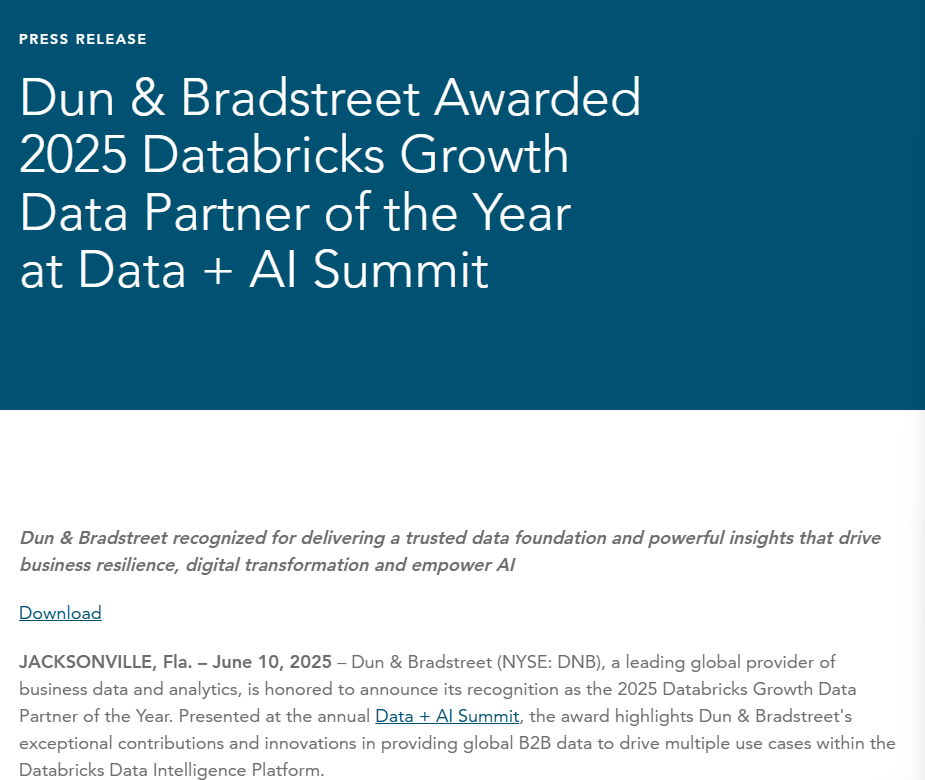
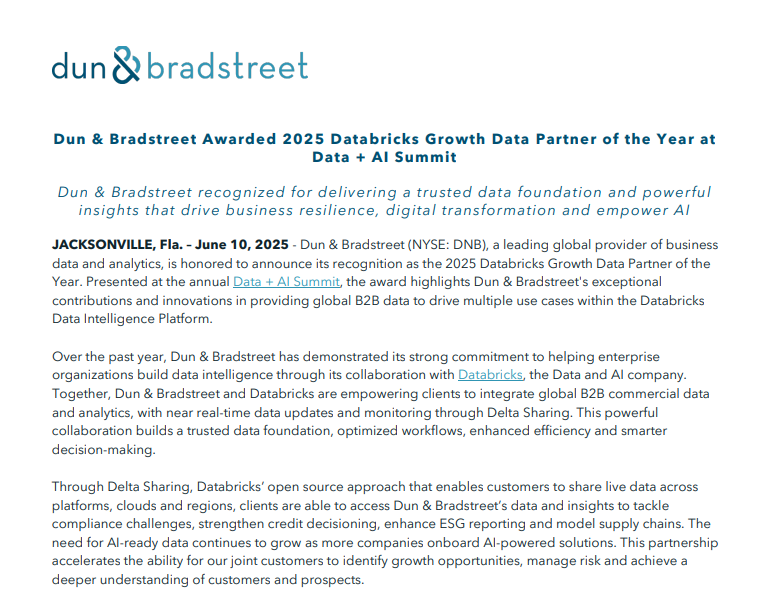
Award press release announcements work best when the award is credible, recognizable, and relevant to the people you want to reach. For this example, it’s a company shaping the future of AI and data recognizing one of the most established names in business intelligence, creating a strong narrative around D&B’s continued influence in where enterprise data is going.
Here’s what they do best:
- Name the award and the awarding body right in the title.
- Reinforce positioning (data + AI) without needing heavy narrative.
- Provide clean, quotable proof points from company leaders that add context and are easy to quote.
This format works because it borrows authority. The award says what you can’t (usually) say about yourself.
At a glance:
- Time + resources: Low
- Expected outcomes: Trust, validation
- Ideal use cases: Rankings, certifications, industry awards
Expansion / Market Growth Press Release
A press release meant to signal scale and momentum to investors, partners, and markets.
Example: United Airlines: Announces Largest International Expansion in History

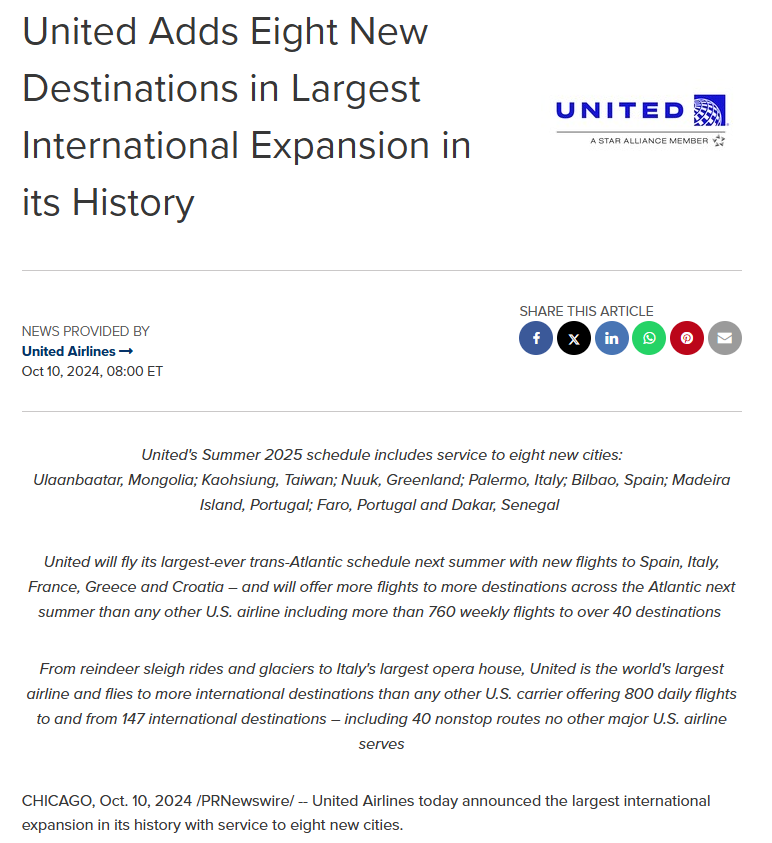
This example works because it turns geography into momentum. United doesn’t just announce new routes; they frame the announcement as a milestone. That framing is what earns coverage beyond the travel vertical.
Here’s what they do best:
- Frame growth as a strategic move, not just a location update
- Anchor the expansion with concrete numbers
- Subheader-maxxing. The press release packs the biggest details into the subheader.
Whether growth shows up geographically or financially, it signals progress. In this case, United is doing both, expanding its global footprint while reinforcing the scale of its ambitions.
At a glance:
- Time + resources: Low
- Expected outcomes: Trade press coverage, investor signal, partner confidence
- Ideal use cases: New markets, offices, customer segments
Partnership / Strategic Alliance Press Release
A press release announcing a collaboration between two organizations.
Example: Novo Nordisk and OpenAI: Partner to transform how medicines are discovered and delivered
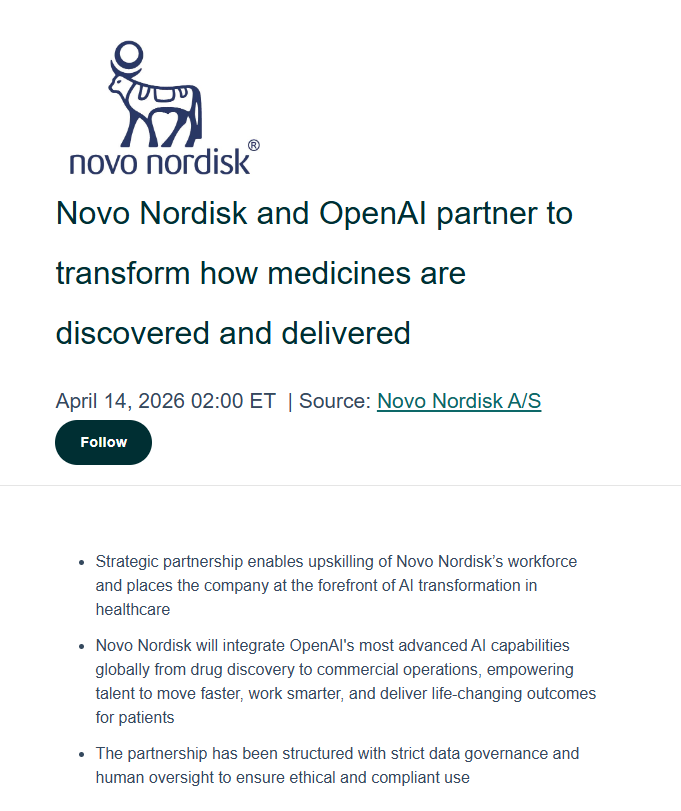
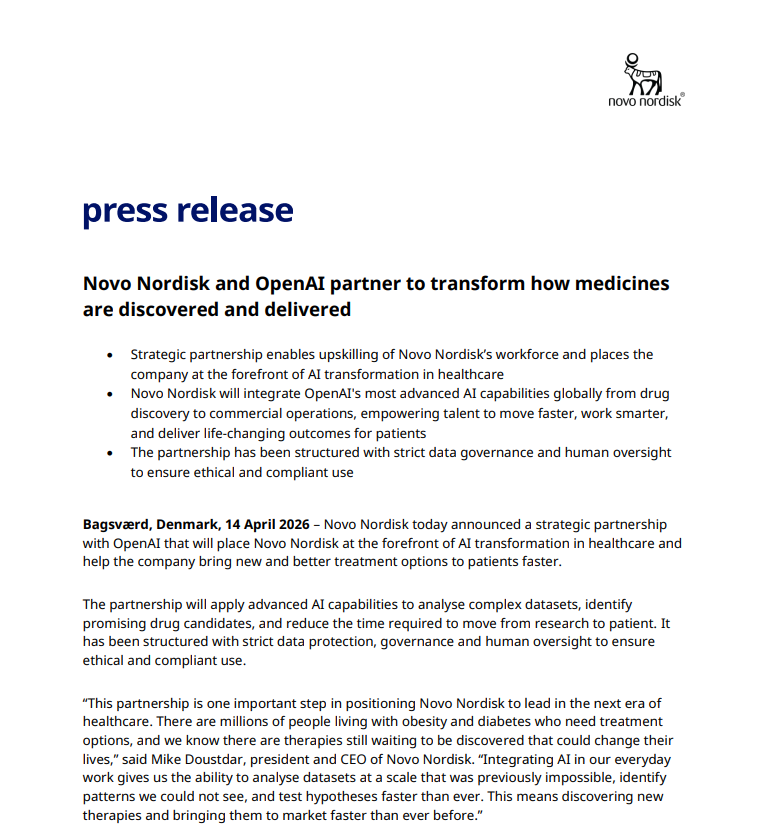
This one earns its coverage before you read a single paragraph. Two globally recognized names, a mission-driven headline, and a purpose that goes well beyond co-branding. OpenAI brings cutting-edge AI capabilities, Novo Nordisk brings real-world healthcare impact.
Here’s what they do best:
- Open with patient impact, not organizational structure
- Subheader-maxxing, again. Here’s another company that’s doubling down on this tactic with a bulleted list for skimmability.
- Position two brands together as one story and include insights from both CEOs
Partnership releases often read like contract announcements. The best ones read like a product launch. Lead with what changes for the customer, fan, or user, and let the business logic follow.
At a glance:
- Time + resources: Medium
- Expected outcomes: Coverage in both brands’ verticals, audience crossover, distribution lift
- Ideal use cases: Integrations, co-marketing, distribution
Funding / Investment Press Release
A press release announcing financial backing or investment, signaling market validation.
Example: Nas.com: Raises $27M Series A
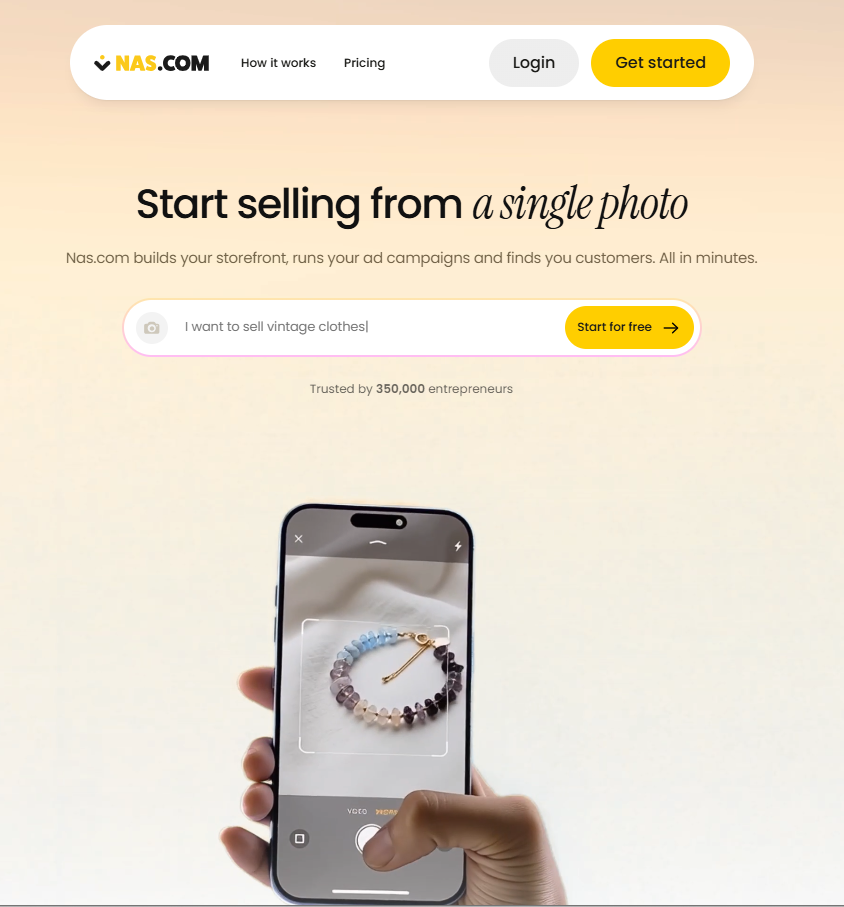
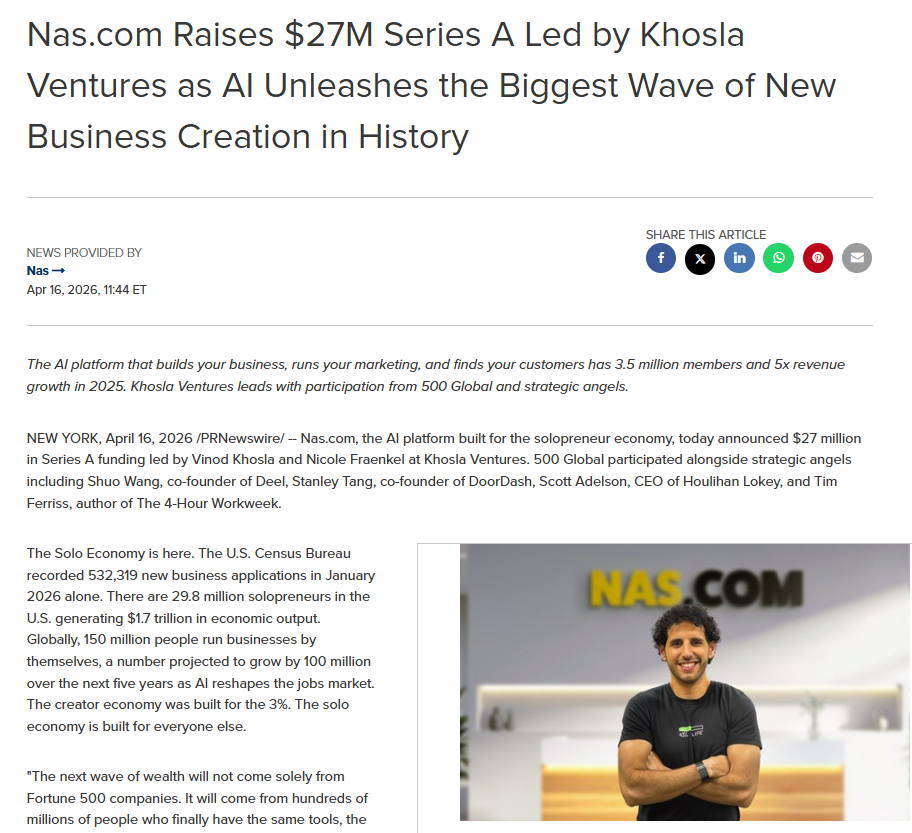
The headline alone earns its place. Nas.com doesn’t say “raises $27M Series A.” It ties the round to a macro shift: AI-driven business creation. Ultimately, the announcement serves to position the company as built for the moment. The funding becomes evidence of a thesis, not just a number.
Here’s what they do best:
- Frame the funding around a market shift
- Position investors as validators: Khosla, Deel, DoorDash, and Tim Ferriss are all mentioned to tell the story about who believes in the solo economy
- Use customer stories strategically (a farmer in Mexico, a yoga instructor in Singapore, a seamstress in Texas)
Funding releases fail when they lead with the number and stop there. This one leads with the world the money is going to change.
At a glance:
- Time + resources: Low
- Expected outcomes: Tech and business press coverage, investor signal, talent attraction
- Ideal use cases: Seed through Series D+, strategic investments, government grants
Merger & Acquisition Press Release
A press release communicating a company acquisition or merger.
Example: Block Renovation: BuildZoom Acquisition
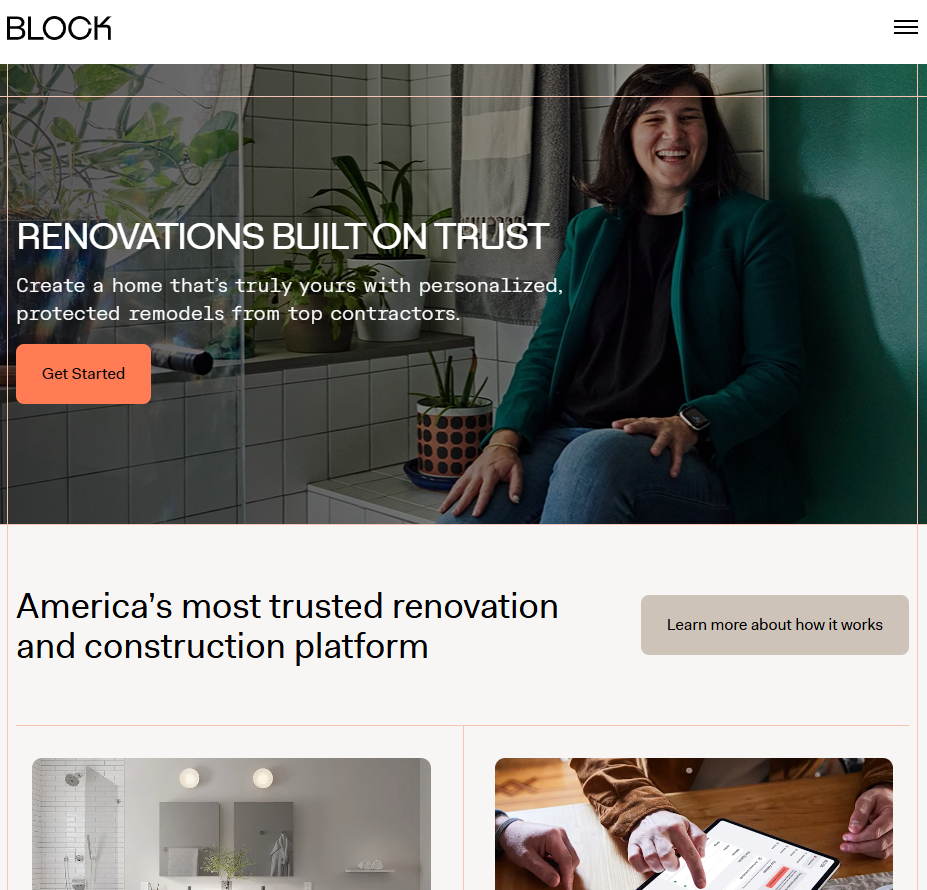
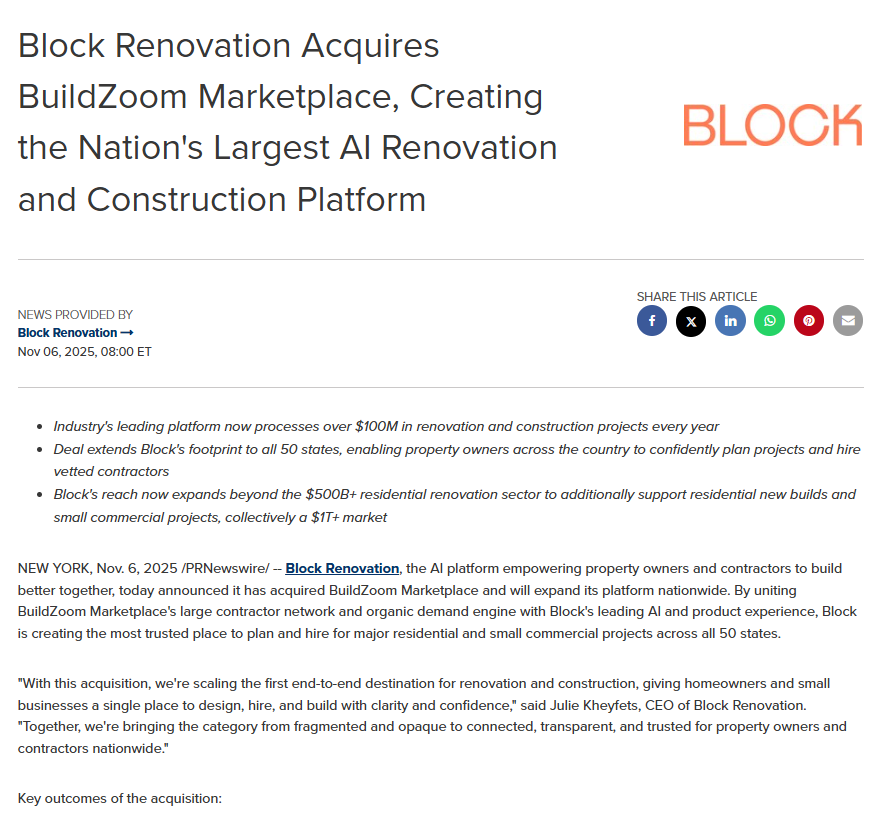
Smaller M&A announcements don’t have the luxury of letting the deal speak for itself. Block Renovation solves this by leading with the strategic logic: what BuildZoom brings, not just what was acquired. The release reads like a business case, which is exactly what analysts, partners, and press need to understand the move quickly.
Here’s what they do best:
- Explain what capability or market position was gained
- Frame the move in terms of customer or market impact
- Include quotes from both sides that reinforce the “better together” angle
This type of press release is best when it makes the acquisition feel inevitable and strategic, like it was the only move that made sense.
At a glance:
- Time + resources: Medium
- Expected outcomes: Business press coverage, competitor attention, talent and investor signal
- Ideal use cases: Technology acquisitions, team acquisitions, market consolidation
Executive / Leadership Announcement Press Release
A press release announcing key leadership hires or changes.
Example: The Walt Disney Company: Leadership Team for Expanded Disney Entertainment Segment
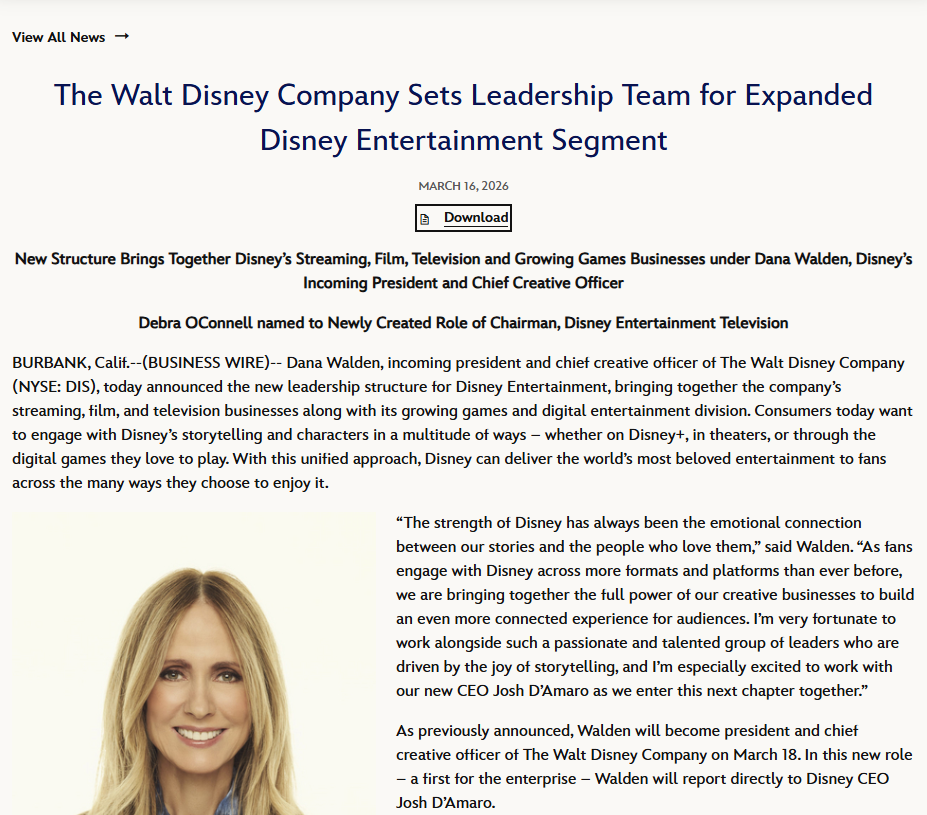
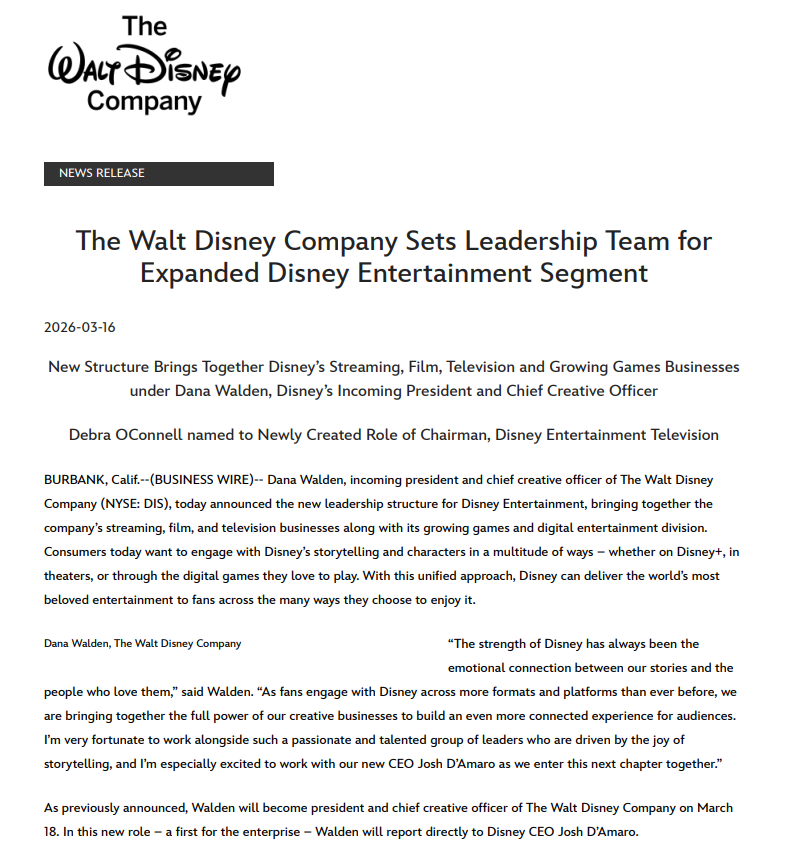
Leadership announcements sometimes read like org chart updates. This one is more like a strategic memo. Disney uses Walden’s appointment as president and chief creative officer to explain how the company is restructuring around where entertainment is going: streaming, film, television, and games, unified under one leader.
Here’s what they do best:
- Lead with the structural logic, not the names, to signal a new strategic direction
- Use the incoming leader’s voice to frame the reorganization as a creative vision
- Reinforce company trajectory
This type performs best when the role is tied directly to strategic growth or change.
At a glance:
- Time + resources: Low
- Expected outcomes: Business and trade press coverage, investor and talent signal, competitive awareness
- Ideal use cases: C-suite appointments, restructuring announcements, board changes
Event Press Release
A press release promoting an upcoming event.
Example: TensorWave: Introduces “Beyond Summit”


What makes this release work is that the name change does real narrative work. “Beyond CUDA” becoming “Beyond Summit” isn’t just a rebrand, it’s a narrative statement: the AI infrastructure market has matured beyond a single vendor, and TensorWave is planting a flag in that shift. Journalists covering AI compute have an angle before they even read the body copy.
Here’s what they do best:
- Use the event rename to signal a market shift
- Detail the specifics (date, city, and audience)
- Let the “about” section carry the company’s credibility without interrupting the event narrative
The subheadline does what most event releases skip entirely: it tells you what attendees will actually get. Real-world performance, deployment, and scaling strategies from engineers and researchers.
At a glance:
- Time + resources: Low
- Expected outcomes: Attendance, visibility
- Ideal use cases: Launches, conferences, activations
Embargoed Press Release
A press release distributed in advance under embargo to control timing.
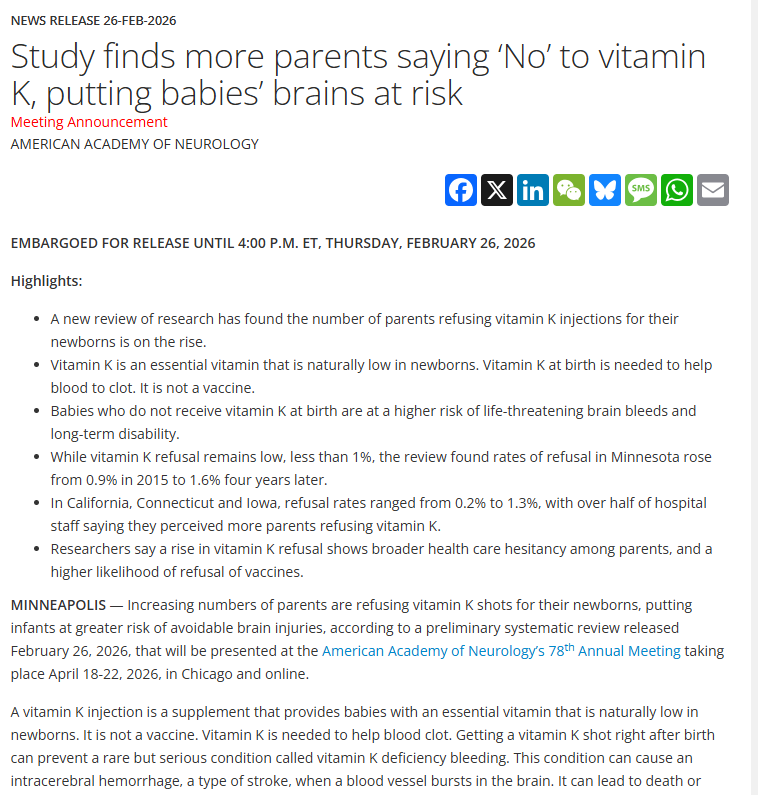
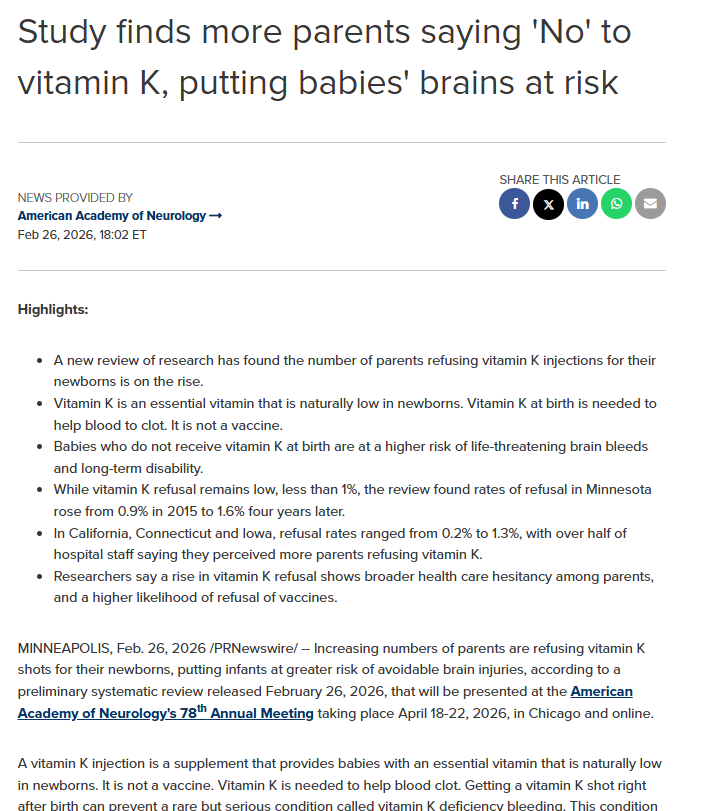
This release gets the fundamentals exactly right. The embargo time is stated at the top in plain language: 4:00 PM ET, Thursday, February 26, 2026. No ambiguity, no footnotes. Every journalist who receives it knows precisely when coverage can go live.
Here’s what they do best:
- Open with a bulleted highlights section that gives journalists the story in under 60 seconds
- Present the data in a sequence that builds the case
- Include a limitation statement from the researchers, which adds credibility rather than undermining it
Embargoes work when the news is complex enough to require preparation time. Research with statistical findings, clinical implications, or public health stakes fits that criteria. This one does all three.
At a glance:
- Time + resources: Medium
- Expected outcomes: Tier-1 press coverage, in-depth reporting, sustained media cycle
- Ideal use cases: Research findings, regulatory announcements, product launches, financial results
3. Best Examples of Press Releases
At Green Flag Digital (GFD), we spend a lot of time building press releases that not only “announce news,” but support a bigger public relations and brand strategy. Usually, the aim is to earn more media coverage that builds brand awareness.
The press release examples below are especially relevant to our work because they’re built to travel across newsrooms, search, and social media, and they include the kinds of structure AI systems can quickly parse.
Data / Industry Report • Research-Backed Through Leadership • Seasonal or Timely • Data-Backed Lifestyle Insight • Cultural Commentary • Public Interest or Safety • Product Launch • Product Update or Feature • Social-First or Trend-Led • Crisis or Reactive • Brand or Repositioning Announcement
Data / Industry Report Press Release
A press release built to share proprietary research or industry trends that journalists can cite directly.
Example: Cision — 2025 State of the Media Report
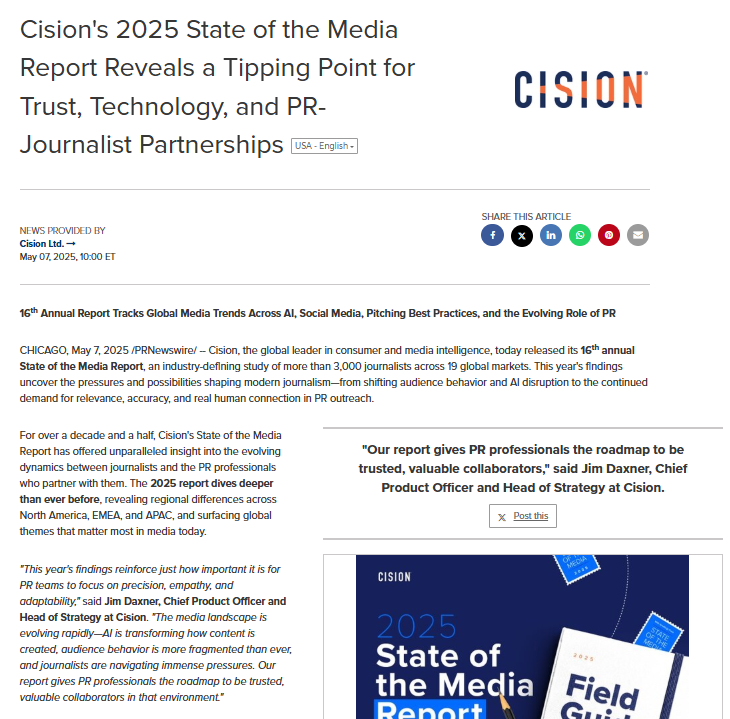
What better example to start with than one straight from Cision, a “household” name for PR and media pros. Their annual State of the Media Report exemplifies the value the brand offers PR professionals by polling journalists about the things that matter most, and by how they present the press release itself.
Here’s what they do best:
- Lead with a single, editorial-ready insight instead of the report title
- Include quotable statistics directly in the body copy
- Structure findings so journalists don’t need to download the report
This is a perfect example of how to turn research into ongoing earned coverage. And it’s worth calling out our favorite finding from the report: 72% of journalists still cite press releases.
At a glance:
- Time + resources: High
- Expected outcomes: Media pickup, backlinks, trust
- Ideal use cases: Annual reports, benchmarks, surveys
(Research-Backed) Thought Leadership Press Release
A press release that uses original data to shape opinion rather than announce a product.
Example: IBM – AI Security Breach Statistics Report
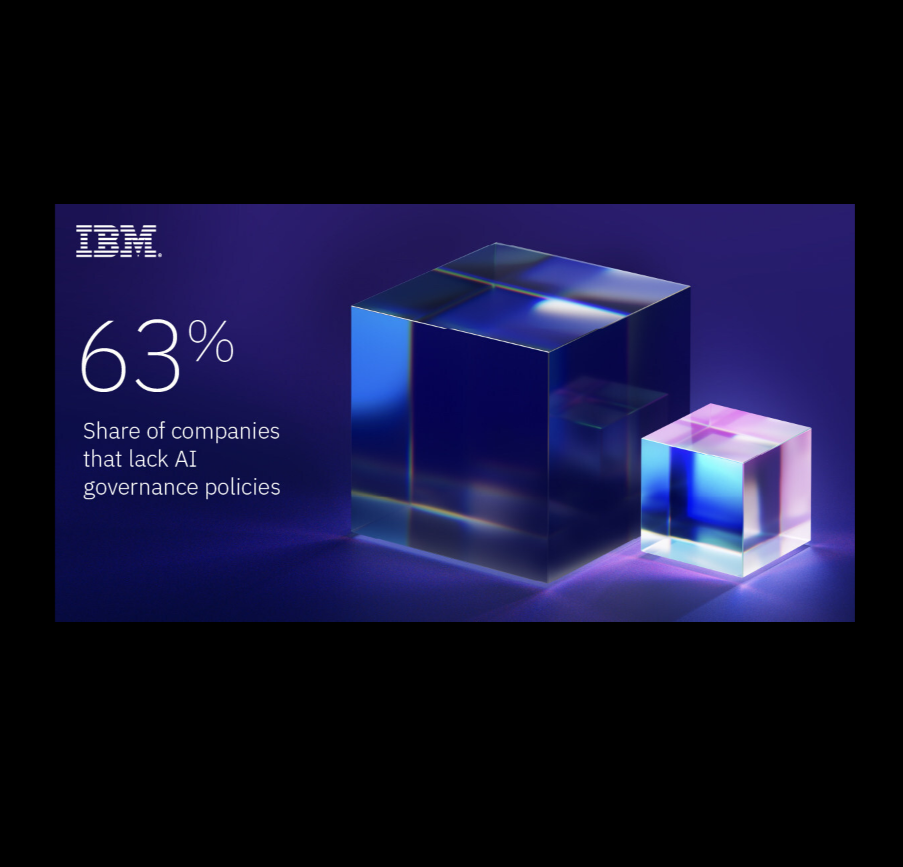
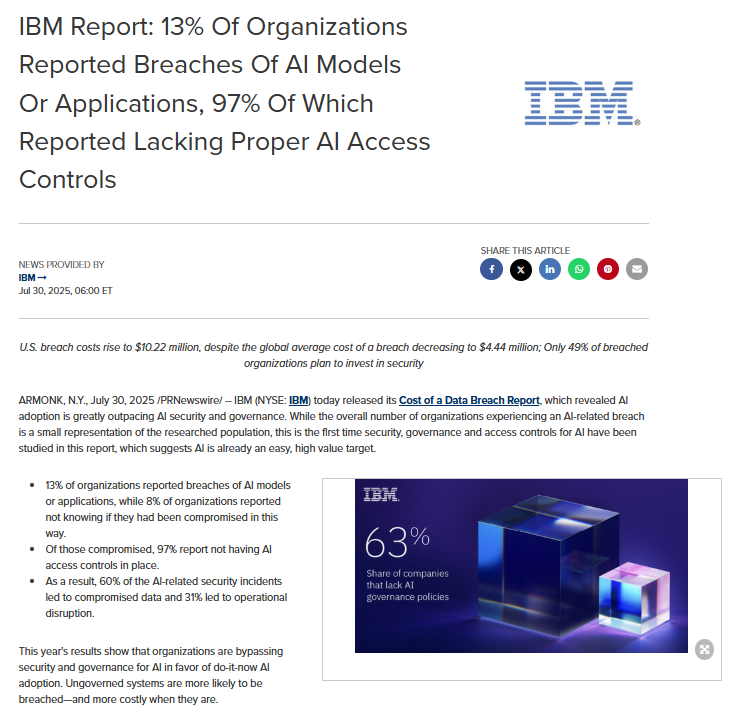
This example from IBM shared proprietary research on AI security risks. Backed by nearly 6,500 data breaches investigated over the past 20 years. IBM doesn’t just report findings, they interpret them. That’s the difference between data and thought leadership.
Here’s what they do best:
- Put the most alarming stat directly in the headline
- Frame technical risk in business-language consequences
- Position IBM experts as interpreters, not promoters
This type works best when the data itself creates urgency, and IBM’s findings make it clear that breaches are not getting better as people adapt and use AI more quickly.
At a glance:
- Time + resources: Medium–high
- Expected outcomes: Thought leadership, mentions
- Ideal use cases: Emerging tech, risk, regulation
Seasonal or Timely Press Release
A press release tied to a predictable calendar moment or seasonal behavior.
Example: Quad – Holiday Shopping Sentiment Survey
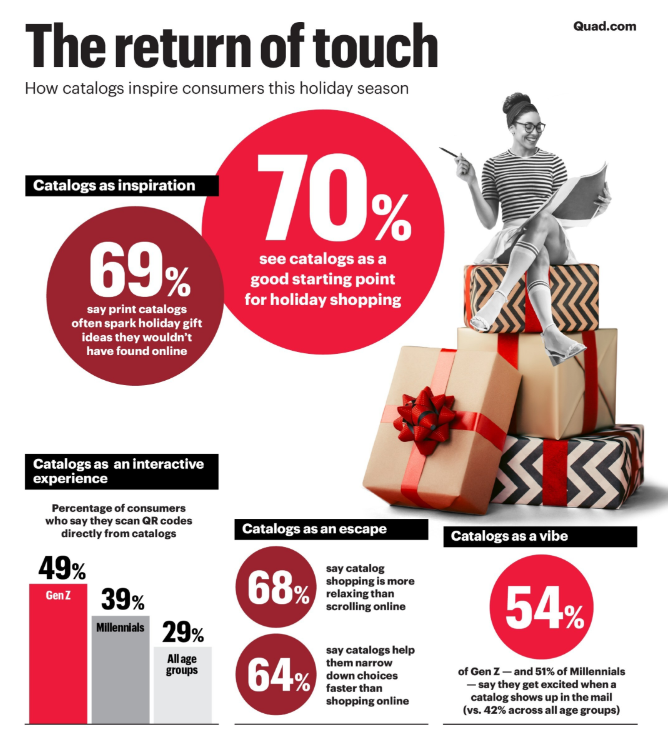
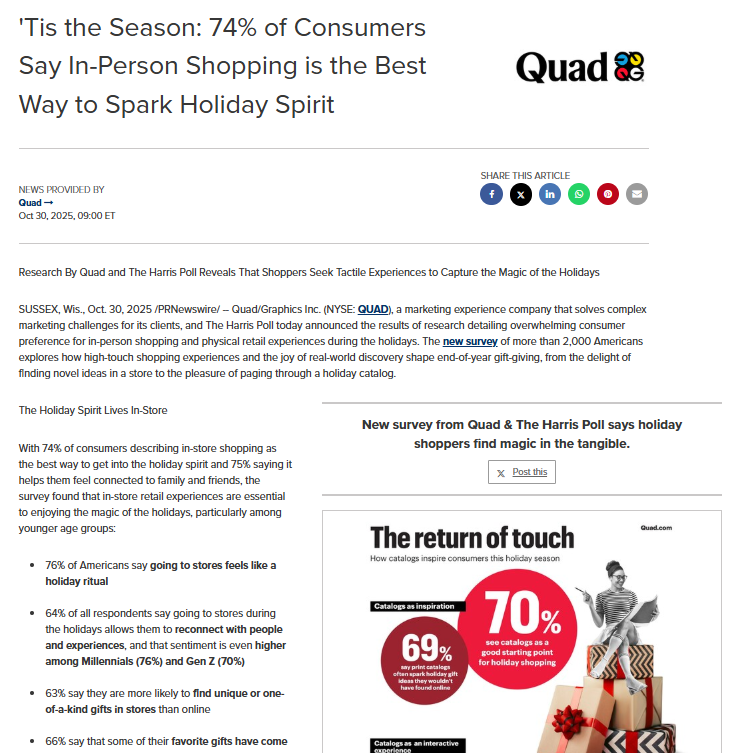
In this example, marketing experience company Quad announced consumer shopping preferences during the holiday season. We all have experienced the joy (or stress) of holiday shopping, and Quad hooks into that moment with real data proving that consumers want a little more magic in their holiday shopping experiences.
Here’s what they do best:
- Time the release for when editors are already assigning holiday stories
- Frame the data around emotion (joy, wonder, excitement), along with statistics
- Keep findings simple and repeatable
The real move here is timing: releasing a consumer sentiment survey before editors assign their holiday shopping stories means Quad’s data becomes source material, not a follow-up pitch.
At a glance:
- Time + resources: Low–medium
- Expected outcomes: Lifestyle coverage
- Ideal use cases: Retail, travel, consumer brands
Data-Backed Lifestyle Insight Press Release
A press release that uses original research to connect a brand to a broader cultural or lifestyle conversation.
Example: Peerspace – “Friendship Is Fitness” Research Report

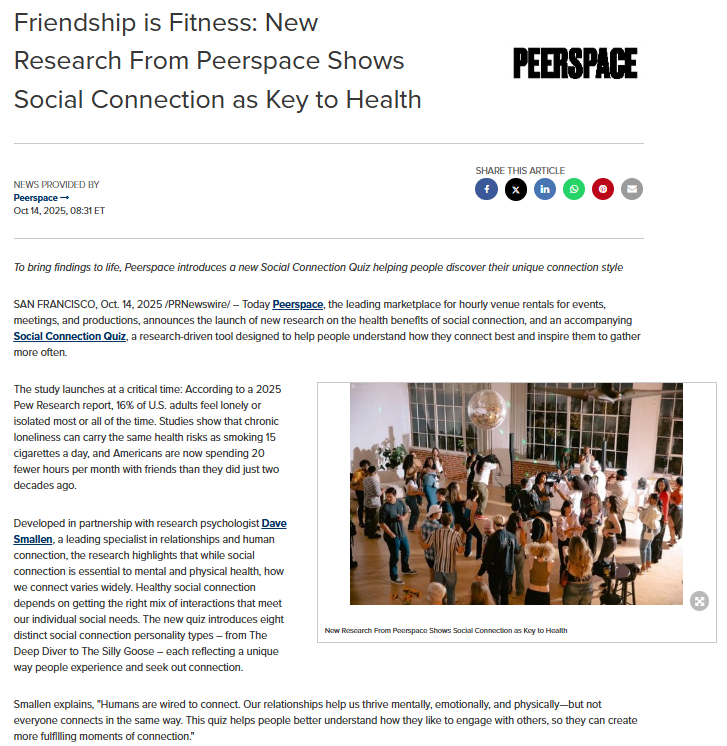
This example from Peerspace uses original research to build a quiz. It hinges on the relationship between social connection and health, positioning the brand within a broader wellness conversation rather than narrowly within event rentals.
Here’s what they do best:
- Lead with a memorable, human insight in the headline.
- Use data to expand brand relevance, aligning Peerspace with wellness, connection, and lifestyle media
- Create multiple editorial angles at once, appealing to health, culture, and business outlets without changing the core narrative
This type performs best when research tells a human story and earns the brand a place in a larger cultural conversation.
At a glance:
- Time + resources: Medium
- Expected outcomes: Lifestyle pickup, authority, backlinks
- Ideal use cases: Brand repositioning, cultural insight, original research
Cultural Commentary Press Release
A press release designed to react to or challenge an existing cultural moment.
Example: J.P. Bourgeois Wine Imports – “Dry January Is for Quitters”
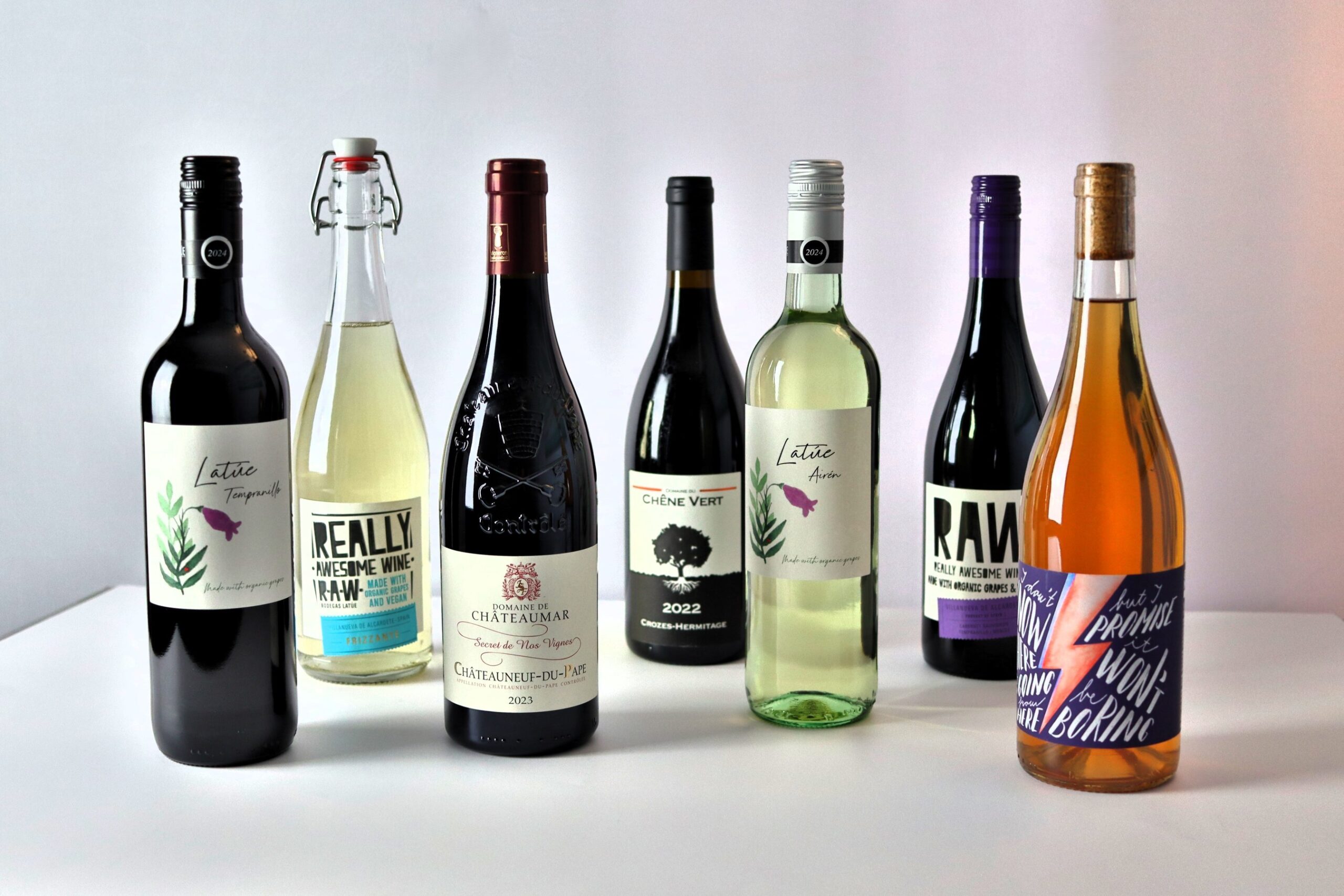
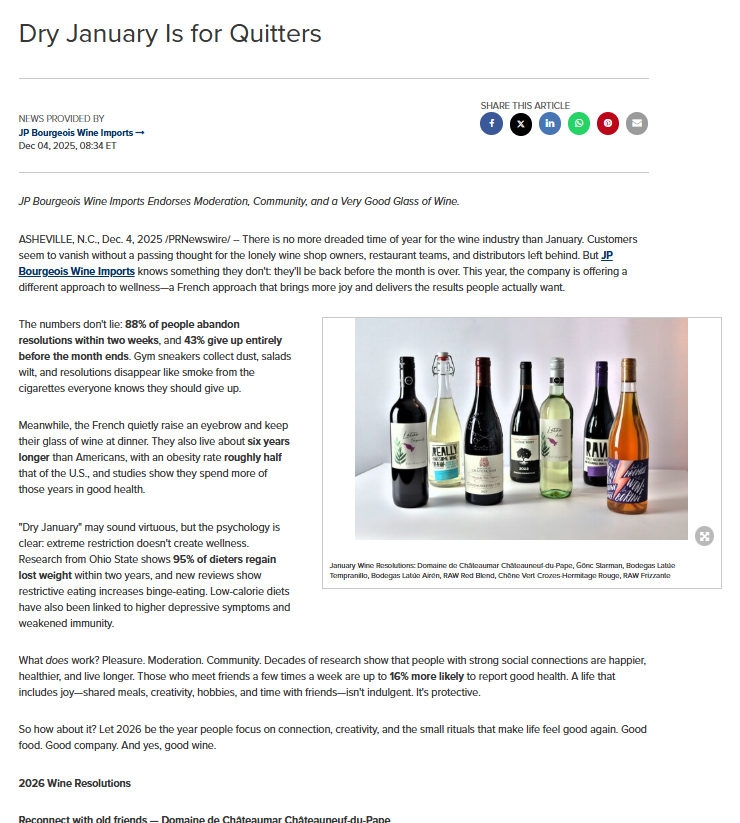
This example challenged a widely recognized cultural trend, bucking the New Year detox practice of abstaining from alcohol, namely wine, and suggesting everyone do it the French way.
Here’s what they do best:
- Assume shared cultural context without explanation
- Use a headline that invites reaction and debate
- Maintain a consistent, confident brand voice throughout
At a glance:
- Time + resources: Low
- Expected outcomes: Buzz, social pickup
- Ideal use cases: Challenger brands, lifestyle
Public Interest or Safety Press Release
A press release focused on consumer protection, safety, or practical guidance.
Example: Nationwide – December Driving Risk Report
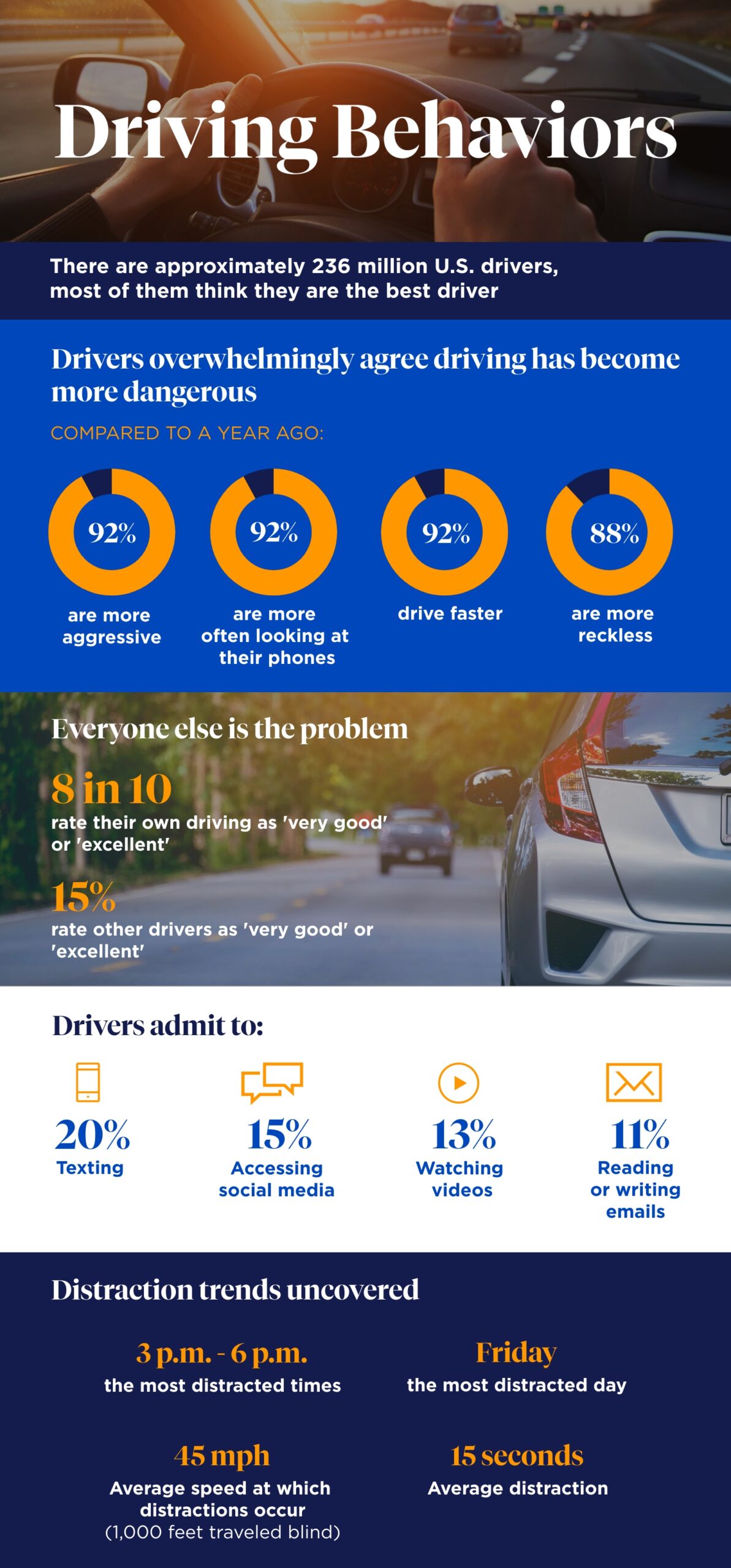
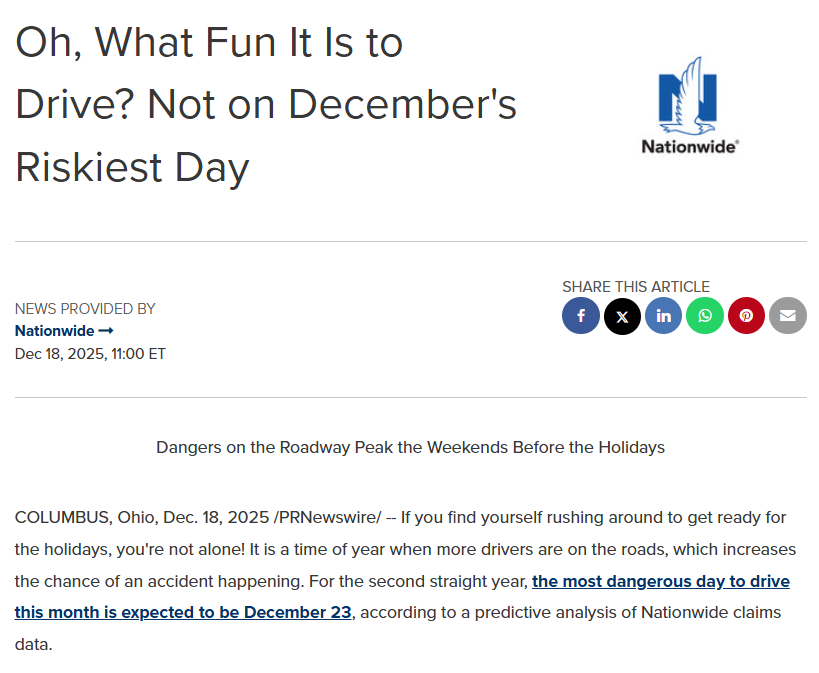
This example from Nationwide relies on safety and public interest (it also taps into seasonality). The release balances a serious topic with lighter language, but backs up their expertise with proprietary survey data, authoritative quotes, and a clear tie-in to their driving rewards program.
Here’s what they do best:
- Use light wordplay to draw attention without undermining seriousness
- Lead with a major stat based on their research
- Align the data with an announcement of a program to promote safety
This type performs best when credible data raises awareness around risk and the brand, or even a non-profit, clearly shows how it is responding.
At a glance:
- Time + resources: Medium
- Expected outcomes: Broad pickup, goodwill, trust builder
- Ideal use cases: Insurance, automotive, health
Product Launch Press Release
A press release announcing a brand new product or offering.
Example: Ben & Jerry’s – New Sundaes Launch

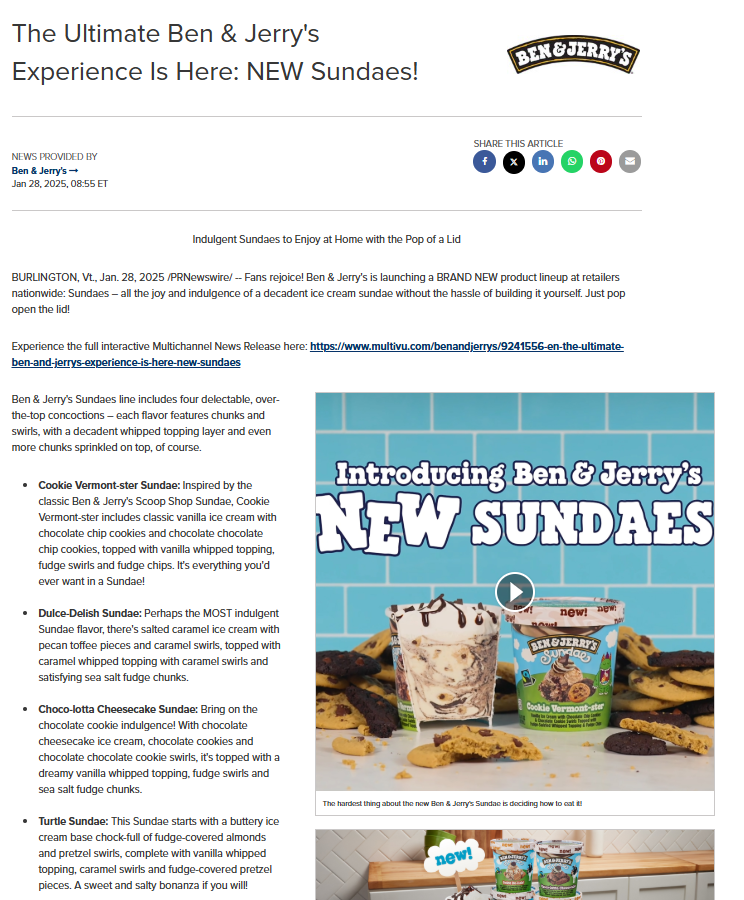
This example from Ben & Jerry’s announced new sundae menu items, but it reads more like a brand experience than a menu update. The release leans into sensory language, embedded multimedia, and the brand’s signature playful tone to make a menu update feel like a moment worth covering.
Here’s what they do best:
- Embed video and imagery directly into the release
- Describe the experience, not just the product
- Write in the same tone journalists would use to make it easy to quote directly
At a glance:
- Time + resources: Medium
- Expected outcomes: Product coverage
- Ideal use cases: Food, retail, consumer tech
Product Update or Feature Press Release
A press release announcing improvements, new functionality, and price shifts.
Example: Skyscanner – Flight Savings Feature Launch
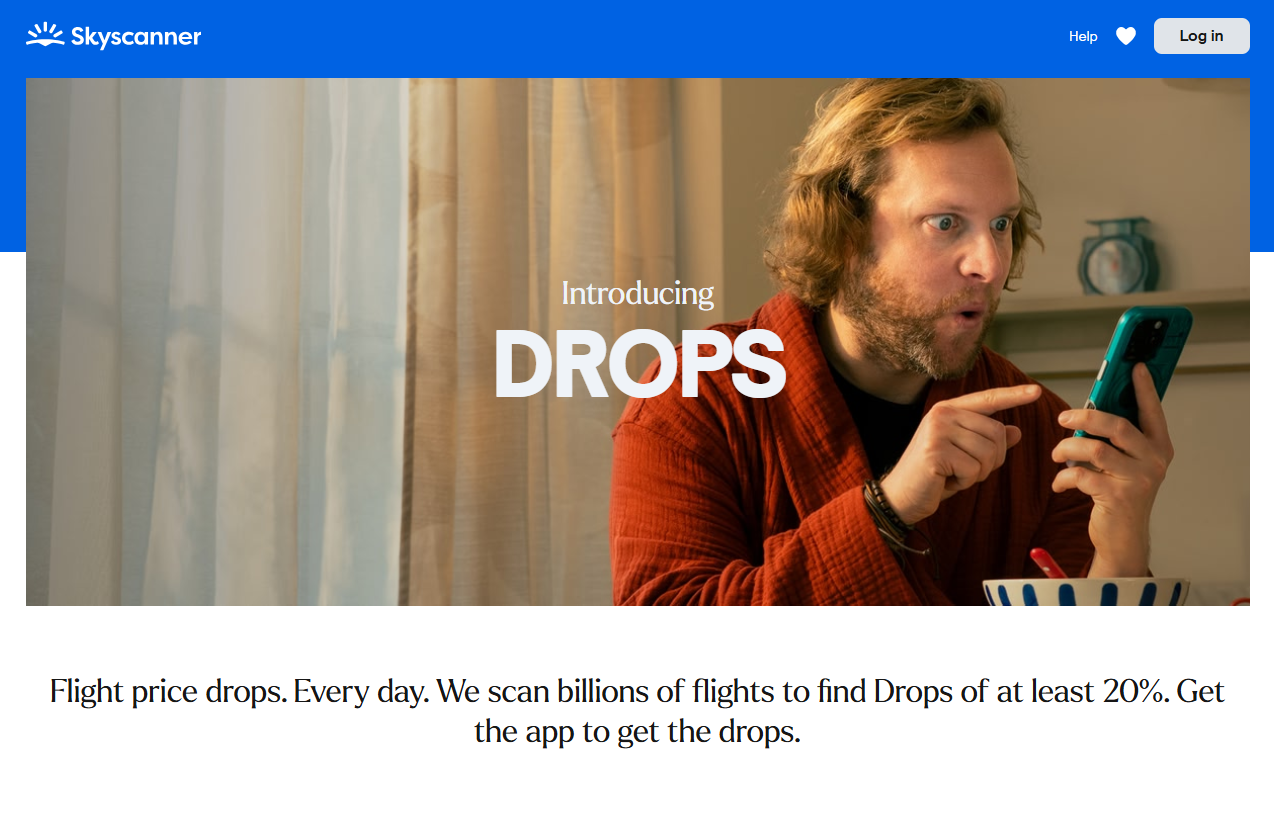
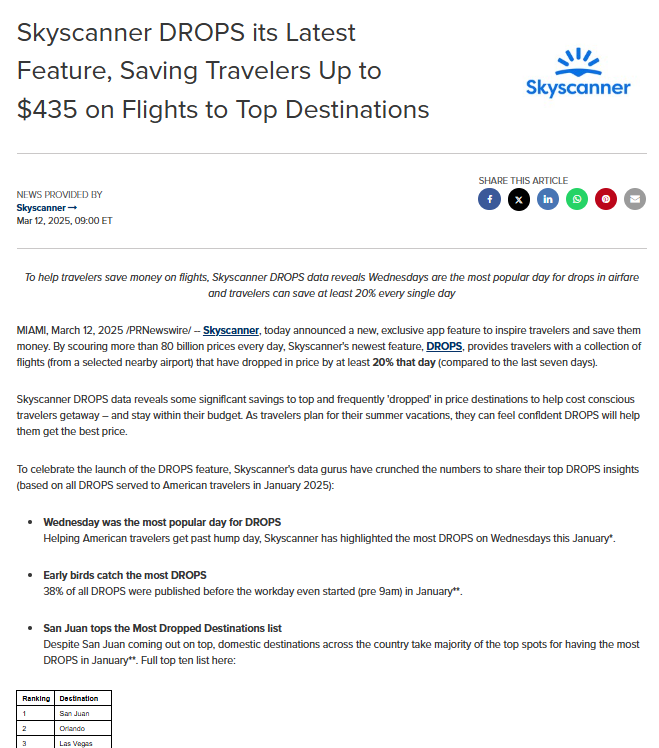
This example introduced a new feature focused on helping travelers save money on flights. What makes it work is the specificity: the headline puts a real dollar figure front and center, giving journalists and readers an immediate, concrete reason to pay attention.
Here’s what they do best:
- Lead with a clear cost, dollar value in the headline
- Use tables and bullets for fast information extraction
- Make the benefit obvious without technical detail
Quantified value turns updates into stories.
At a glance:
- Time + resources: Low
- Expected outcomes: Product mentions
- Ideal use cases: SaaS, travel, fintech
Social-First or Trend-Led Press Release
A press release written to travel across social feeds and discovery platforms.
Example: Hershey’s – Dubai-Inspired Chocolate Bar Launch

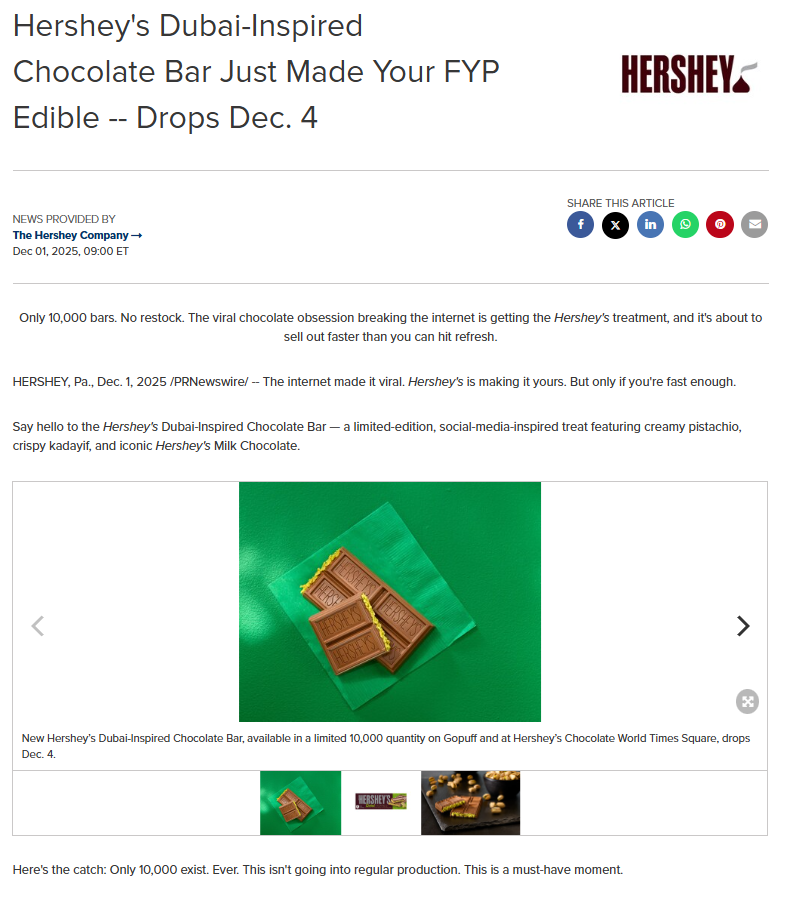
This example leaned directly into TikTok and online trends.
Here’s what they do best:
- Use platform-native language (“FYP,” “drops”)
- Signal relevance to social editors immediately
- Support AI and search discovery with descriptive phrasing
Distribution is built into the copy itself.
At a glance:
- Time + resources: Medium
- Expected outcomes: Social pickup, discovery
- Ideal use cases: Consumer brands, launches
Crisis or Reactive Press Release
A press release responding to a mistake, controversy, or unexpected event — otherwise known as crisis communications.
Example: Coors Light – Statement on Misspelled Ads
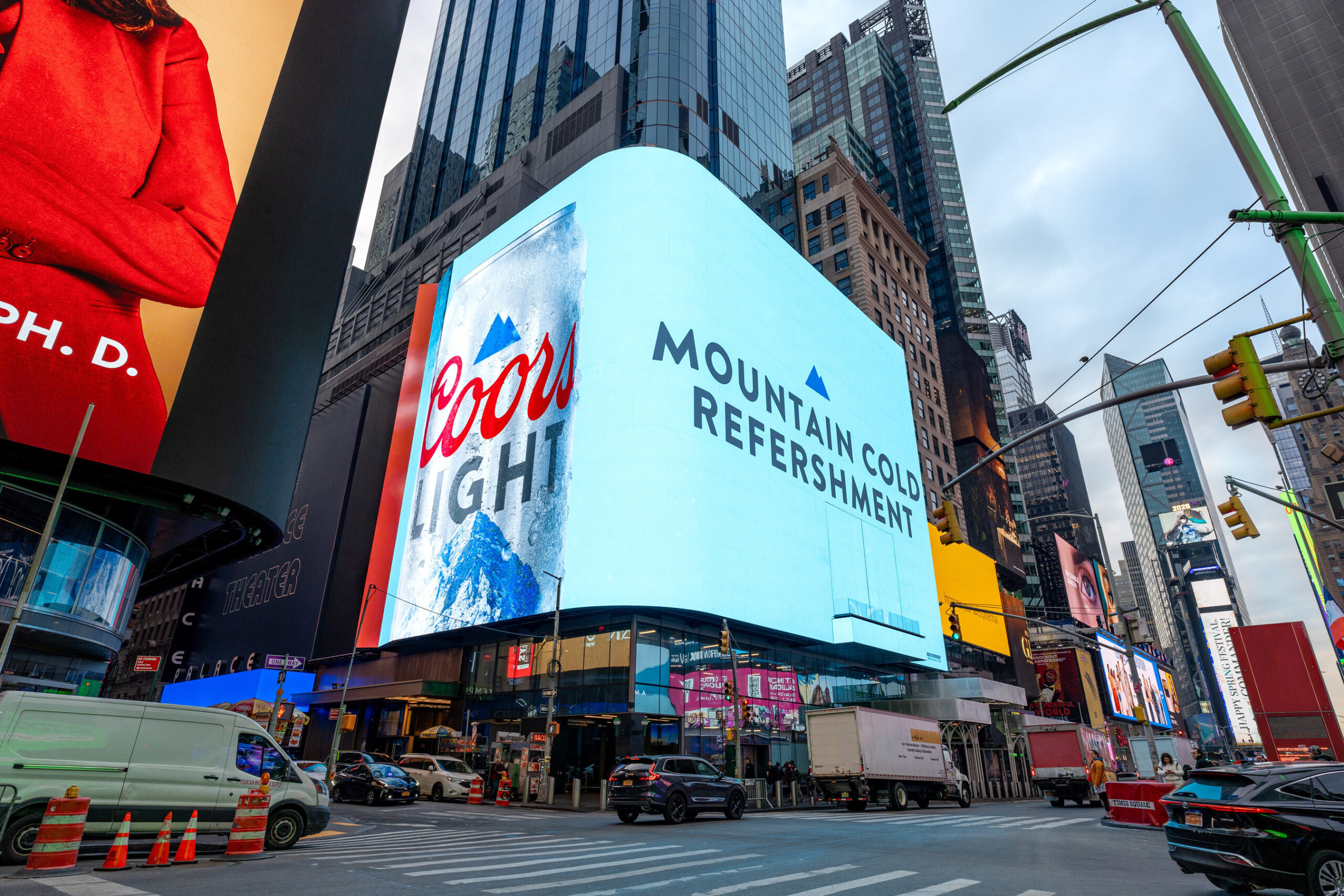
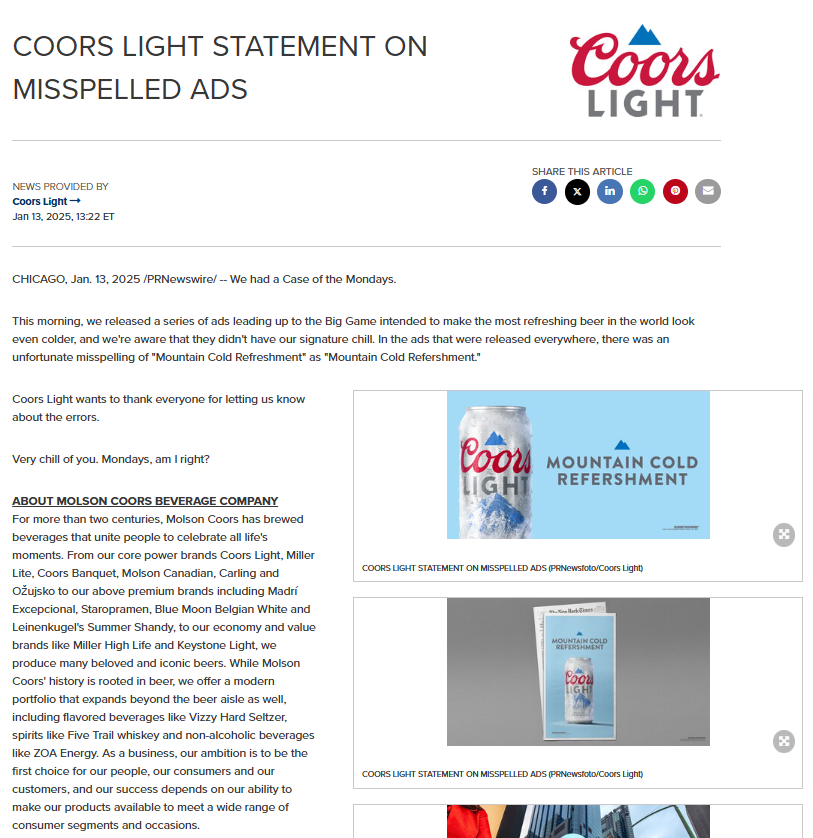
This example from Coors Light addressed a public brand error: misspelled advertisements that had already been noticed online. Rather than burying or over-explaining the mistake, the release leaned into the brand’s casual tone and handled it with speed and self-awareness.
Here’s what they do best:
- Respond quickly and proportionately
- Acknowledge the issue without defensiveness
- Maintain brand tone under pressure
Speed and tone matter more than length, and so does knowing your brand’s permission to be bold. Other headline worthy reactive stories we’ve seen lately (not necessarily press releases but noteworthy):
- RyanAir’s ability to turn a public spat between their CEO and Elon Musk into an “idiot” sale within hours.
- McDonald’s CEO “McNibble” moment sparked a full fast-food pile-on, with Burger King, Wendy’s, and others jumping in within hours, turning one awkward product video into a multi-brand cultural moment.
At a glance:
- Time & Resources: Medium
- Expected outcomes: Reputation management, issue containment, brand visibility, social pickup
- Ideal use cases: Brand mishaps, viral moments, timely cultural reactions, online discourse
Brand or Repositioning Press Release
A press release announcing a brand refresh or strategic shift.
Example: Nextdoor – Brand Redesign Announcement
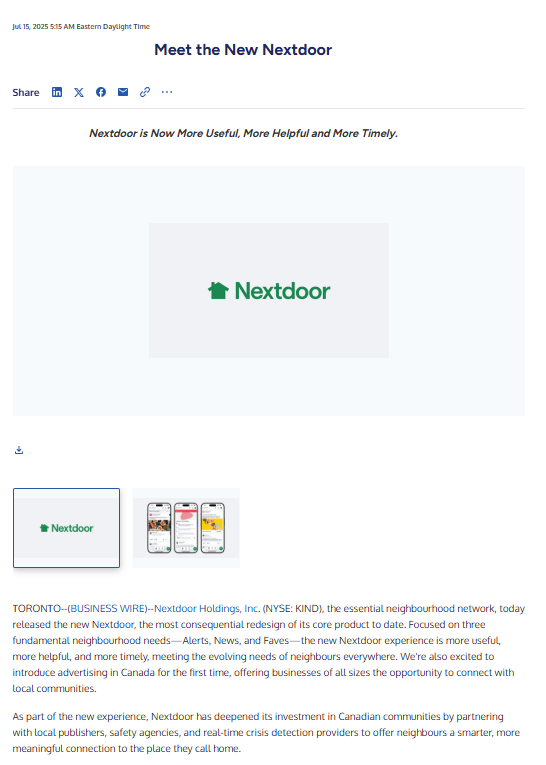
This example from Nextdoor announced a full brand refresh, and they clearly led with that new visual identity. The release included updated messaging and a clearer articulation of the company’s direction. Unlike a product launch, a repositioning press release has to explain why the change was made and what it signals about where the company is headed.
Here’s what they do best:
- Explain why the change was necessary
- Connect brand decisions to user experience
- Avoid over-indexing on visuals
Brand announcements resonate when they explain intent.
At a glance:
- Time + resources: Medium
- Expected outcomes: Understanding, alignment
- Ideal use cases: Rebrands, pivots
4. How to Write a Press Release?
You don’t need a long checklist or rigid press release template. The strongest press releases tend to follow the same core principles. Here is a press release writing guide pulled directly from our team’s internal SOP for writing press releases.
- Craft a strong, newsworthy HEADLINE that makes the key message clear. Write out multiple headline options to see which is the strongest. We find that including a major stat or narrative takeaway in the title/headline text performs best.
- Include the brand/company name in the headline, if possible. This helps with brand clarity, credibility, and search visibility.
- Take advantage of the subheader text to add more context. The subheader is valuable character real estate; often, press releases come with a word cap. Use this area to clarify the “why it matters” without repeating the headline.
- Lead with the biggest takeaways. The inverted pyramid method works best for press releases. Right after the dateline, in the lead paragraph, include the most important insight or the headline-worthy announcement.
- Use quotes to share real expertise. Quotes should add interpretation, insights, or authority, not just enthusiasm.
- Add in a bulleted list of key takeaways. Write each bullet as if it could stand alone as a mini-headline.
- Optimize the limited use of characters by including tables. Tables are especially effective for rankings, comparisons, or geographic data.
- If possible, include a multimedia component. Whether it’s video, photo, a custom design, an infographic, or interactive, only include if it helps explain or reinforce the narrative or story.
- When relevant, always include a short data methodology/explainer. When using research, polls, or analysis, in particular. If possible, a link to a methodology section elsewhere works too.
- Include a link back to the client website or relevant page as a clear call to action (CTA). Give journalists and readers a clear next step for deeper context.
- Use a templated “About” for the client, often referred to as a boilerplate. This ensures brand messaging stays clean and accurate across releases. Get the approved by the company or client once, and use it again and again. Be sure to include contact information, a media contact, and a phone number.
- Learn from others. Study press releases that earned significant media pickup or backlinks in your category. Tools like Ahrefs or Muck Rack can help you reverse-engineer which releases generated the most coverage and link equity. Use that analysis to identify what format, angle, or data type drove the result.
Final Thoughts on The Best Press Releases in 2026
The best press releases today aren’t louder or longer. When done right, they don’t just announce news. They shape how that news gets remembered, repeated, and surfaced across search, media, and AI.
But a press release is just one piece of the puzzle. The real impact comes when it’s part of a coordinated approach, paired with digital PR outreach, content strategy, and distribution that compounds over time.
Looking for more information on PR? Check out our PR pricing and packages guide.
FAQs
What is a press release, and what should it include?
A press release is an official announcement a company shares with journalists, platforms, and the public. It’s used to communicate news like product launches, research findings, leadership changes, or brand updates.
A well-written press release typically include the seven parts of a press release:
- Headline: a clear, newsworthy hook
- Dateline: date and location of the announcement
- Lead paragraph: the most important information first (who, what, when, where, why)
- Body: supporting detail, data, or context
- Quote: a spokesperson statement that adds authority, not just enthusiasm
- Boilerplate : a short company description used across every release
- Contact information: so journalists can follow up quickly
Increasingly, we see that press releases also optimize the subheadline and include a multimedia component (photo, video, or infographic) to improve pickup and discoverability. These aren’t required, but they tend to perform better across modern newsrooms and search platforms.
Today, press releases don’t just reach journalists. They also support SEO, feed AI-powered discovery tools, and travel across social platforms and newsrooms.
What is press release distribution, and do I need a distribution service?
Broadly, press release distribution is how your announcement gets in front of journalists, platforms, and audiences, and whether you need a paid service depends on your reach and goals.
This type of distribution can include posting to your internal newsroom, sharing on social media and LinkedIn, direct media relations outreach, or using a paid distribution service like Newswire.
A press release distribution service can help with reach and visibility, but it doesn’t replace a strong story, clear target audience, or thoughtful PR strategy.
We see that the best results usually come from combining distribution with follow-up outreach.
What are the top press release distribution services?
Popular press release distribution services include:
- PR Newswire
- Business Wire
- GlobeNewswire
- EIN Presswire
Each varies in reach, cost, and industry focus. The right choice depends on your target audience, budget, and whether distribution is paired with direct media relations outreach.
In practice, many PR teams send press releases directly to existing media connections or use targeted cold outreach to reach journalists who are most likely to cover the story.
Can ChatGPT write press releases?
Yes, but only as a starting point. AI tools like ChatGPT can help draft structure, brainstorm headlines, and speed up early-stage writing.
What AI can’t reliably do:
- Apply real PR judgment to what’s actually newsworthy
- Maintain accurate brand voice or verified facts
- Replace the strategic thinking behind media targeting and outreach
The most effective press releases today opt to use AI to move faster on the draft, then rely on human expertise to sharpen the message, validate accuracy, and make it worth a journalist’s time.
What should I do after a press release goes live?
After a press release goes live, plan a follow up that includes:
- sharing the release across social media,
- posting it to LinkedIn, and
- reaching out directly to relevant journalists or editors.
Monitor coverage and respond to media inquiries quickly. Be ready to provide additional context or assets.
What are the five W’s of a good press release?
The five W’s: who, what, when, where, and why should be answered clearly and early in every press release.
In most effective press releases, all five appear in the first paragraph, right after the dateline. This structure helps journalists, search engines, and AI tools quickly understand the news without digging for context. Think of it this way: if a journalist can’t extract all five W’s from your lead paragraph without scrolling, the release needs another pass.
Update log:
4/20/26: Reorganized content and copy, updated press releases and images
Case study · Digital PR
15 days
from study launch to The New York Times
A 100-city index and an interactive map became a Times Calculator column.





Leave a Reply