
Education brands sit on some of the richest datasets on the internet but only a handful turn that data into something journalists actually want to cover and search engines want to surface.
Students and learners don’t want just another report card. So while many of the digital marketing and PR campaigns we love are reports, they frame data as stories that matter.
Jobs, money, mobility, culture, and power are broken down and then packaged up in ways that peel back the complicated and clean up the messy numbers to make them work for real people, local reporters, national news desks, and even AI-driven search.
Below, we break down which education industry digital marketing and PR campaigns we think get this right. These aren’t fluffy brand narratives. They’re rankings, surveys, and reports deliberately engineered for coverage, links, authority, and long-term organic demand. If you’re building content in education, edtech, higher education or student services, these digital PR examples show what’s working right now, and, just as importantly, what smart teams are repeating on purpose.
What works best for education industry digital marketing and PR?
- Geo rankings, especially those highlighting states and countries, still dominate education PR when tied to money, jobs, or policy.
- Cultural hooks (language mistakes, noise, ramen) outperform purely academic framing.
- Annual reports become link magnets when refreshed, localized, and opinionated.
- Student “pain point” data earns broader coverage than achievement metrics alone.
- The strongest campaigns pull double duty as news hooks and search explainers, making them AEO-ready by default.
1. Brainly
Here Are the States Most (and Least) Prepared to Win the AI Race in 2025
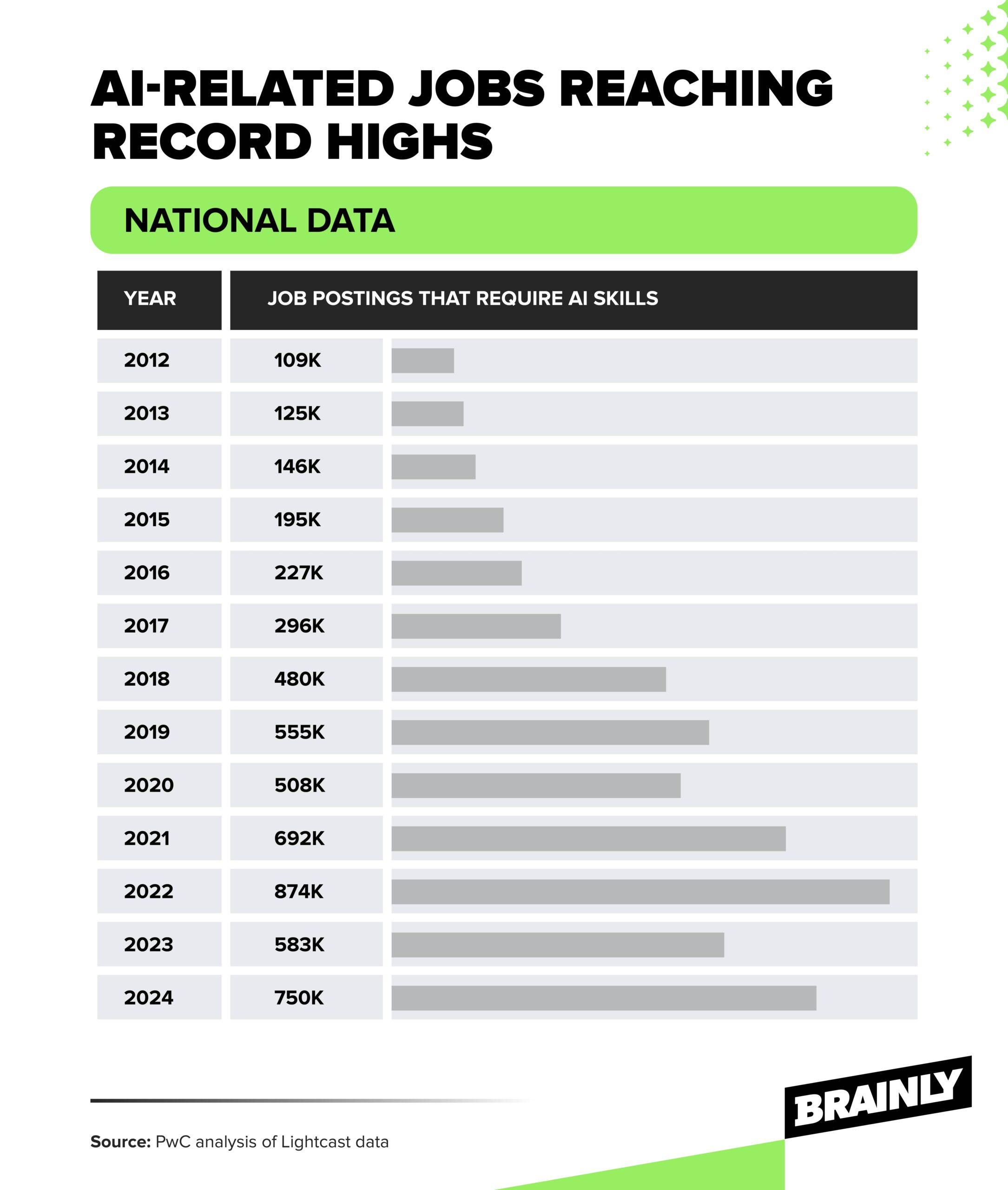
This state-by-state data story from Brainly connects education readiness directly to AI competitiveness, positioning learning infrastructure as a predictor of economic and technological leadership.
Pitting states (or even universities) against one another consistently performs well in local news, because it gives reporters a built-in regional angle. The AI-layer on this one powers that emotional response up a whole new level.
Here’s what they do best:
- Tie education data to economic futures: The report explicitly frames education readiness as a workforce and GDP issue, not a school performance one.
- Use state rankings for instant localization: Each state can be pitched independently to regional outlets without rewriting the core narrative.
- Frame learning as national competitiveness: “Winning the AI race” mirrors language used by policymakers and tech leaders.
- Create natural hooks for tech and policy reporters: The asset fits comfortably into AI, labor, and innovation coverage.
2. Preply
The most bilingual cities in America

This city-level analysis uses bilingualism as a cultural and economic signal, ranking U.S. cities based on how multilingual their populations are — and what that says about identity, opportunity, and mobility.
“Most” and “best” city analyses are typically easy wins for local coverage.. From “Los Angeles Is Officially One of America’s Most Bilingual Places” to “El Paso tops list as most bilingual city,city-based reporters love stories that spotlight their hometown in a positive light. For education brands, this creates huge flexibility: language, STEM, jobs, higher education, cost of living, student wellbeing, almost any dataset can be reframed to show which cities are leading, lagging, or doing the most of something people care about.
Here’s what they do best:
- Localize language learning at the city level: Rankings allow immediate pickup by regional and metro outlets.
- Frame bilingualism as cultural capital: Language skills are positioned as an asset tied to work, migration, and community.
- Design for map- and list-based coverage: The format supports visuals, social sharing, and easy syndication.
- Appeal beyond education desks: The story fits culture, business, urban life, and immigration beats.
3. Learner
States With the Highest and Lowest SAT Scores
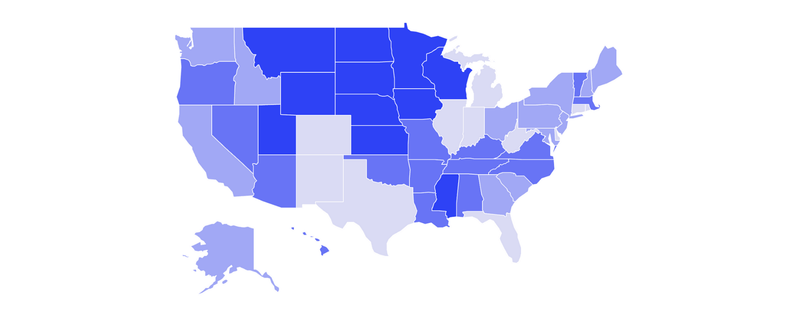
This rankings-led asset translates standardized test performance into a clear, comparative story aligned with predictable search and media demand.
Yes, this is the third geo-ranking on our list. And yes, we still love them because they keep working for us. The strongest versions are evergreen, built on a stalwart (ideally proprietary) dataset, and tightly connected to brand authority. Learner nails that balance here. After all, what do learners often come to Learner for? SAT prep.
Here’s what they do best:
- Target evergreen interest: SAT performance is a perennial concern for parents, students, and educators.
- Use rankings journalists already understand: No additional explanation required for press.
- Support SEO with simple structure: Clean state-by-state formatting aligns with search intent.
- Reinforce authority through outcomes: The brand becomes associated with measurable academic performance.
4. BrokeScholar
The Ramen Index
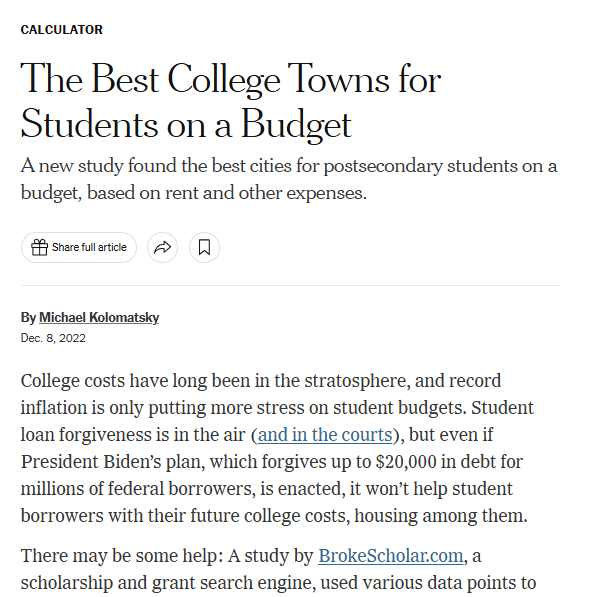
This index reframes student affordability through a survival-cost lens, using ramen as a proxy for cost-of-living pressure.
We had to give a shout for this study we worked on for BrokeScholar. It scored a wealth of local coverage, as well as a feature in the New York Times Calculator column. The Ramen Index landed well because it humanizes affordability, turning abstract cost-of-living pressure into something instantly understandable and emotionally resonant.
Here’s what we did best:
- Translate economics into lived experience: Ramen acts as a universal shorthand for student budgeting.
- Create headline-ready metrics: The index simplifies affordability into a single, memorable concept.
- Tap emotional student realities: The framing resonates with current and former students alike.
One missed opportunity we let slide was encouraging social sharing: humor and bleakness could have combined to drive engagement.
5. Coursera
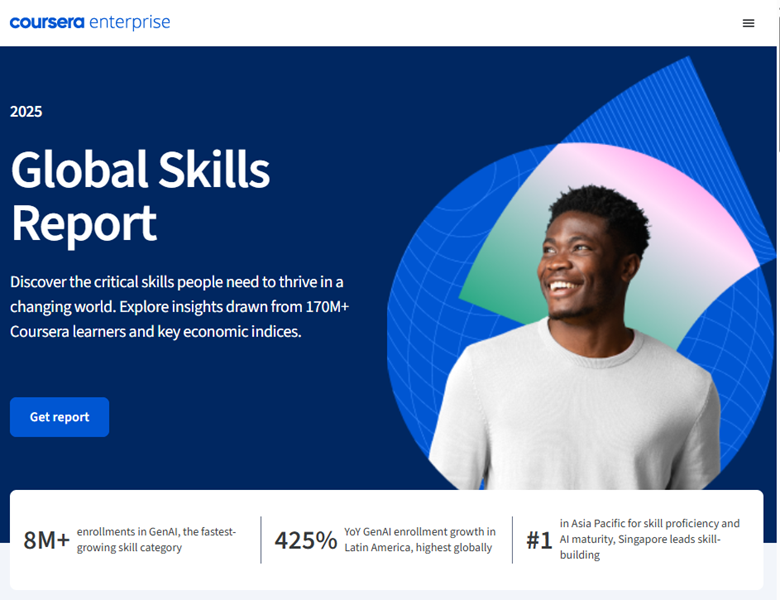
Coursera’s flagship report connects education, workforce skills, and labor market demand at a global scale, positioning the brand as a long-term authority.
We have seen industry, “state of” and annual reports such as this gaining major momentum in the last year. They are increasingly beautiful, killer for both PR and sales, and deliver an abundance of traffic and attention when played right. This type of report earns authority by consistency; its real value compounds over time as journalists and institutions learn to trust it as a reference point.
Here’s what they do best:
- Maintain annual continuity: Each release builds on previous authority.
- Align education with jobs data: Skills are framed around employability and demand.
- Serve multiple audiences: Journalists, policymakers, and enterprises all find relevance.
- Build institutional trust: The report acts as a reference point, not a one-off campaign.
6. Duolingo
Duolingo wins by making proprietary product data feel culturally explanatory, not self-promotional.
Their data visuals are simple, no-fluff, and on-brand. And while I’m (personally) disappointed that they haven’t leveled up their design, the truth is that the data and story are conveyed in a straightforward way that leaves no room for misinterpretation.
Here’s what they do best:
- Leverage product-scale data: Insights are rooted in real user behavior.
- Make trends culturally relevant: Findings intersect with geopolitics and pop culture.
- Package data visually: Charts and rankings are built for redistribution.
- Earn repeat global coverage: The report functions as an annual media moment.
Smaller brands won’t have Duolingo’s scale, but the takeaway still applies: proprietary user data, when distilled into simple, defensible stats, is easy to package, pitch, and share.
7. Studyportals
International Student Interest in the US Falls to the Lowest Level Since Mid-Pandemic
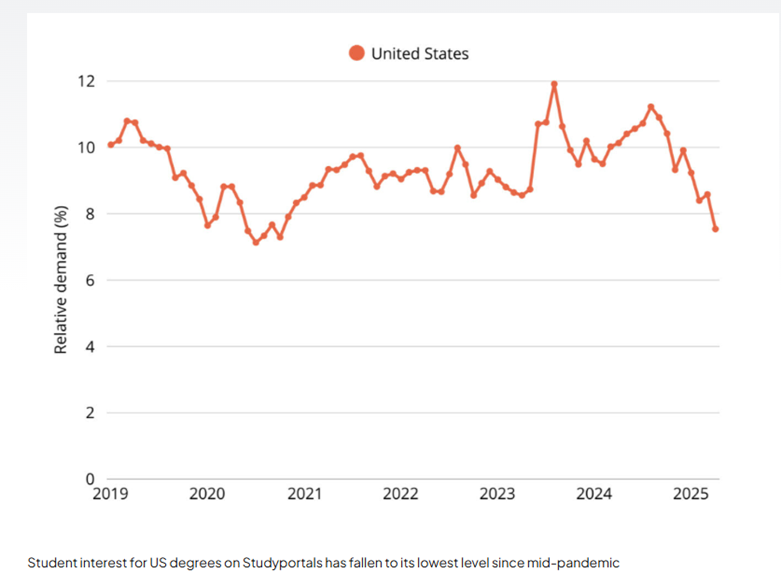
It’s not your usual data study. The insight is based on pageview behavior across the Studyportals network, not survey intent or anecdotal reporting. That makes it a leading indicator: prospective students may not have applied yet, but their browsing behavior already reflects shifting preferences and hesitations.
For journalists and institutions alike, that behavioral signal is often more useful than lagging enrollment data. This report featured in outlets like The Guardian and The Boston Globe.
Here’s what they do best:
- React to real-world change: The data aligns with post-pandemic mobility trends.
- Own international student insight: Studyportals positions itself as a primary data source.
- Serve higher education reporters: The framing fits enrollment and policy desks.
- Influence national narratives: The story speaks to global competitiveness.
8. aparto
61% of Students Blame City Noise for Their Moods
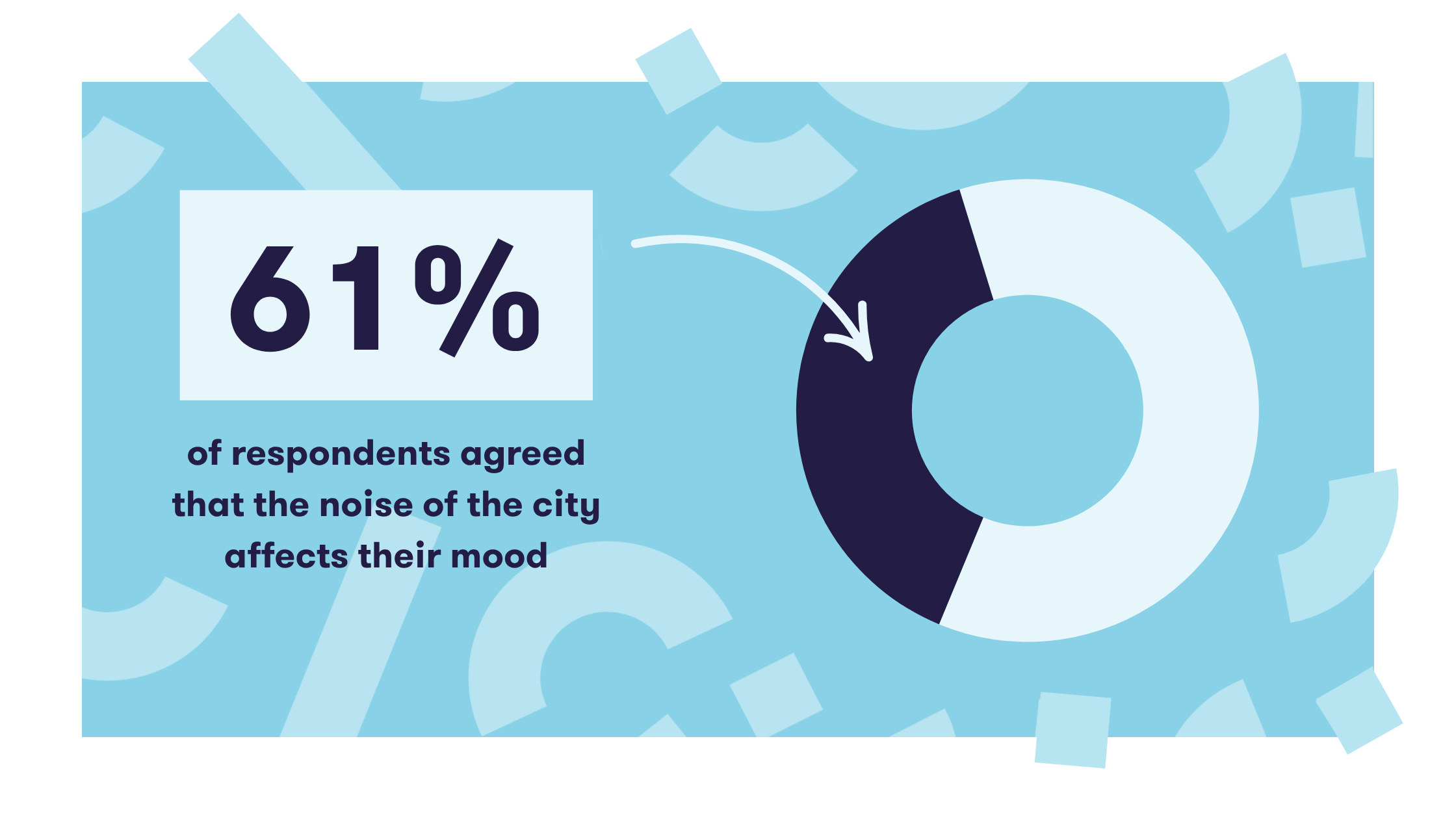
This asset works because it reframes student well-being as an environmental issue that connects to mental health. By tying mood directly to city noise levels, aparto shifts the conversation from “student stress” to where students live and what cities are doing (or not doing) to support them.
We’ve seen wellbeing surveys struggle when they stay abstract. This one doesn’t. Everyone knows what it feels like to be unable to concentrate or sleep because of it. That gives the data report an emotional hook that journalists can easily use.
Here’s what they do best:
- Link environment to mental health: Noise becomes a wellbeing indicator.
- Rank cities for easy pickup: The format supports local and national coverage.
- Use student sentiment data: Self-reported impact strengthens emotional relevance.
- Expand beyond education media: The story fits urban living and health beats.
9. Grammarly
Higher ed students’ AI adoption and professional readiness
This example sits closer to traditional PR and thought leadership than to classic digital PR. A solid example of a traditional press release, there’s no interactive hub, city ranking, or data visual. Instead, Grammarly takes original survey data and writes out the findings in blocks of text. (IMO it would be much better if it at least included a bulleted list.)
The piece is based on a survey of 2,000 students pursuing higher education degrees, and it zeroes in on findings that speak to a much larger conversation about AI and the future of work. For example, 62% of students say learning how to use AI responsibly is essential for their future career success. That stat is clear, opinionated, and immediately quotable, which is exactly what earned it coverage in GovTech, Fast Company, and CNET.
Here’s what they do best:
- Bridge education and work: Learning outcomes are tied to productivity.
- Target executive audiences: The framing supports leadership narratives.
- Package insights for citation: Findings are built to be referenced.
- Support enterprise credibility: The report reinforces B2B authority.
10. ApplyBoard
Top Trends in International Education for 2026 and Beyond
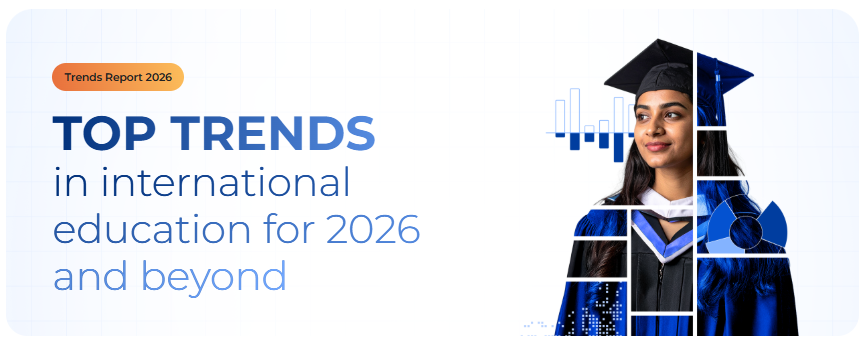
The good ‘ol trend report, leaning heavy on the prediction angle. While it’s beautifully set up like PR-led thought leadership, I’d say the “trend report” is a digital PR classic, too.
ApplyBoard’s Trends Report 2026 pulls together international student demand signals, destination preferences, and mobility shifts, then does the most important thing well: it surfaces the story journalists actually need. Instead of overwhelming readers with raw data, the report highlights and visualizes insights about where students are looking, how preferences are changing, and what that means for institutions and policymakers.
The strength of this report isn’t interactivity or ranking methodology. It’s editorial prowess. The findings are framed around forward-looking trends, making them fresh for coverage across immigration policy, enrollment strategy, and global education.
Here’s what they do best:
- Own destination-based narratives: Country-level framing simplifies coverage.
- Use timely survey data: Pulse surveys allow fast response to global shifts.
- Support policy and recruitment stories: The data speaks for itself.
- Build trust through consistency: ApplyBoard reinforces its authority in the space.
What These Education Industry Digital PR Campaigns Get Right
The best education digital PR campaigns don’t chase coverage or keywords; they earn both. They turn complex data into stories people actually care about. Whether it’s AI readiness, bilingualism, student affordability, or global mobility, the throughline is the same: clear framing and strong data.
What separates the standouts isn’t budget or scale. It is intention.
If you’re sitting on meaningful education data, the opportunity isn’t just to publish it. It’s to shape it into a story that travels across newsrooms, search results, and increasingly, AI-powered answers.
If you want help doing exactly that, we’d love to hear from you.
Appendix: Education Industry Marketing and PR Campaign Examples
These examples are not isolated PR wins. They sit inside broader Education Marketing initiatives and integrated PR Strategy frameworks designed for the modern education sector.
The strongest teams align messaging across digital platforms, marketing campaigns, and Public Relations efforts to reach a clearly defined target audience. They use data to drive differentiation, strengthen brand awareness, and support stakeholder decision-making.
When executed well, these initiatives support both short-term media coverage and long-term digital marketing strategies.
Frequently Asked Questions About Education Marketing and PR Campaigns
What makes a strong education digital PR campaign?
Timely data, clear framing, and relevance beyond academia. Strong campaigns are increasingly multi-channel, integrating social media marketing, influencer amplification, and coordinated messaging across digital platforms to maximize media coverage and audience reach.
At their core, they are designed to generate earned media but can also serve as pillar content that drives organic traffic.
Why do rankings work so well in education PR?
They localize coverage and simplify complex issues instantly. They also perform well when presented in a shareable design for social media and LinkedIn, where localized insights encourage sharing among education institutions and sector professionals.
Can smaller education brands replicate this?
Yes, but it takes time and focus. Smaller education institutions first need to understand where their strongest data sits, what specific beats reporters in the education sector actually care about, and how their messaging can align with those priorities.
That often means testing angles, refining framing, and identifying the right target audience before pitching. It also requires alignment between the marketing team, leadership, and external PR partners to ensure the data supports broader education marketing goals.
Partnering with a specialist can accelerate the process by shaping raw data into structured marketing campaigns and leading targeted outreach to ensure it reaches the right journalists, digital platforms, and stakeholders for meaningful media coverage.
Is SEO or PR more important for education digital marketing campaigns?
The strongest assets align SEO, Public Relations, and social media initiatives under one unified strategy.
How do these campaigns support brand awareness and reputation management?
Data-led PR strengthens brand awareness by positioning education institutions as authoritative sources. When supported by real-time monitoring and reputation management protocols, including crisis communications planning, these campaigns also protect long-term credibility.
Update log:
– Feb 13, 2026: First published





Leave a Reply