
Quick answer: Glossaries aren’t the simple “win” they used to be. As a “pure visits” play for short definitions, the trendlines are against glossary die-hards. But it’s not time to let go — yet. Website glossaries can still work when traffic is a present-tense goal, AEO is treated as a distribution channel, and engagement, comparison, and experience elements are built in at the planning stage.
Over the course of 2025, we built a 100+ page glossary for a cybersecurity SaaS, in an era when informational content is being displaced by AI answer engines and Google snippets. Here’s what we learned.
In this guide
- The results from our 100+ page website glossary
- Why B2B SaaS companies build glossaries
- When a glossary is—and is not—a smart traffic play
- How we structured the glossary for SEO and AI search
- What every glossary entry needs
- How we wrote the glossary content
- How to measure glossary content
- What we would do differently today
Results: What Happened After We Built the Glossary?
| Measure | Result |
|---|---|
| Organic search traffic | Up 480% |
| Top-performing pages | 12 pages of the top 20 traffic pages came from the glossary |
| Share of website traffic | Glossary entries drove 42.6% of the website’s total traffic |
| Referring domains | Grew from ~100 to ~350 during our engagement |
| AEO citations | Twice as many citations as Palo Alto Networks, while also beating CrowdStrike, Wikipedia, and TechTarget |
Traffic is still king.
For our client, organic search traffic is up 480%, with 12 pages of the top 20 traffic pages coming from the glossary. Overall, glossary entries drive 42.6% of the website’s total traffic. That’s especially high, but not wildly unusual for SaaS companies with well-executed glossaries.
Six months post-engagement and a year after content began to grow the site, “freshness” isn’t yet an issue. Overall, traffic continues its jerky upward trajectory, accentuated by waves of traffic from cybersecurity incidents. And referring domains, which grew from ~100 to ~350 during our engagement, are climbing steadily.
In AEO, our client gets twice as many citations as the longstanding security giant, Palo Alto Networks. They’re also beating out CrowdStrike, Wikipedia, and TechTarget.
Because we’re optimized for both types of searches at the same time, we’re seeing successful outcomes in both realms. As AEO research grows in prominence, we expect citations to continue to outpace competitors’, giving our client a first-mover advantage in AEO-optimized glossary content.
Website Glossary Examples: Why B2B SaaS Companies Build Them
Glossaries and dictionaries have long been the bread and butter of B2B SaaS companies. After all, they:
- Lay claim to an entire industry’s lexicon
- Demonstrate mastery of the niche in general
- Build trust with searchers as they navigate unfamiliar industry options en route to the “buy now” button
- Build authority
- Allow the brand to embed its opinion while educating
And they work to bring in traffic: for Mailchimp, a marketing glossary has netted ~600K monthly search visits. In mid-2024, Ahrefs’ SEO glossary drew around 67K visitors. In SaaS, glossary frontrunner Personio nets ~400K monthly users, 95% of the site’s organic traffic, from its “lexicon” content. And deal-modeling Mosaic helps cement its authority with a glossary that nets 43K monthly visitors, ranking for over 20K keywords.
Case study · Cybersecurity SEO + PR
7X
faster organic growth than Upwind’s top competitor
A glossary written for CISOs now drives 55% of site traffic, backed by 16 media placements.
The Challenge: Should You Create a Glossary to Drive Traffic?
So when, in late 2024, a cybersecurity challenger brand came to us asking for a cybersecurity glossary to outrank the standard offerings from their competitors, we wanted to say, “yes.” But we also recognized we were standing on the cusp of SEO changes that made the move risky.
Glossaries aren’t the simple “win” they used to be.
First, upstream traffic and downstream buyers have never been neatly linked.
Tracking is even more challenging when research never leaves the Search Engine Results Page (SERP).
And today, top-of-funnel searchers aren’t often learning about basic “what is” terms from company sites. They’re less likely to click on informational content: 58.5% of US and 59.7% of European searches end without a click.
On top of that, the golden age of glossaries came before the advent of AI answer engines, which could further erode top-of-funnel traffic.
As a “pure visits” play for short definitions, the trendlines are against glossary die-hards, who will certainly struggle with lower click-through rates (CTRs) and in-SERP answers stealing the spotlight.
So, because nearly 91% of search engine market share still came from Google in 2025 and it was a justifiable win for clients, we framed traffic as a present-tense goal. But we also incorporated AI engine ideas that not only differentiated our challenger brand but will also solidify the glossary’s relevance going forward.
So we said, “Yes.” But we also leaned into future-proofing the glossary with what we thought could safeguard it from SEO storms to come.
| A glossary is a stronger fit when… | A glossary is a weaker fit when… |
|---|---|
| You want to lay claim to an industry’s lexicon and demonstrate mastery of the niche | It is only a “pure visits” play for short definitions |
| You can add context, comparisons, expert insight, and real experience | You would be publishing anonymous, superficial definitions that AI can summarize |
| You can maintain a content library that is responsive to SEO and AEO updates | You cannot monitor pages, double down on winners, or keep entries fresh |
| You can measure traffic value, visibility value, and assisted buying behavior | The program must prove its value through last-click attribution alone |
How to Build a Website Glossary for SEO and AI Search
We accounted for each of the funnel problems facing informational content with a four-part strategy:
- Prioritize long-tail queries where AI shines and where previous glossaries hadn’t yet been optimized. We also clustered those keywords by decision questions and trade-offs rather than on internal topical categories. We wanted to optimize for the territory where readers leave the AI engine summaries to look for nuance.
- Treat AEO as a distribution channel and plan for “zero click” exposure. Though we settled on keywords “the old-fashioned way,” combining interest and ranking difficulty, we made sure we had AEO citation optimization elements in every single entry, so SEO traffic wasn’t their only purpose.
- Safeguard SEO traffic by baking in engagement, comparison, and experience elements in each glossary entry at the planning stage. From tables to case studies, comparisons, expert quotes, interviews, calculators, evaluation checklists, and contextual blocks comparing and contrasting multiple terms, add-ons that AI can’t touch are a significant part of maintaining readership from the people our client wanted most—serious, thoughtful searchers happy to dig deeper.
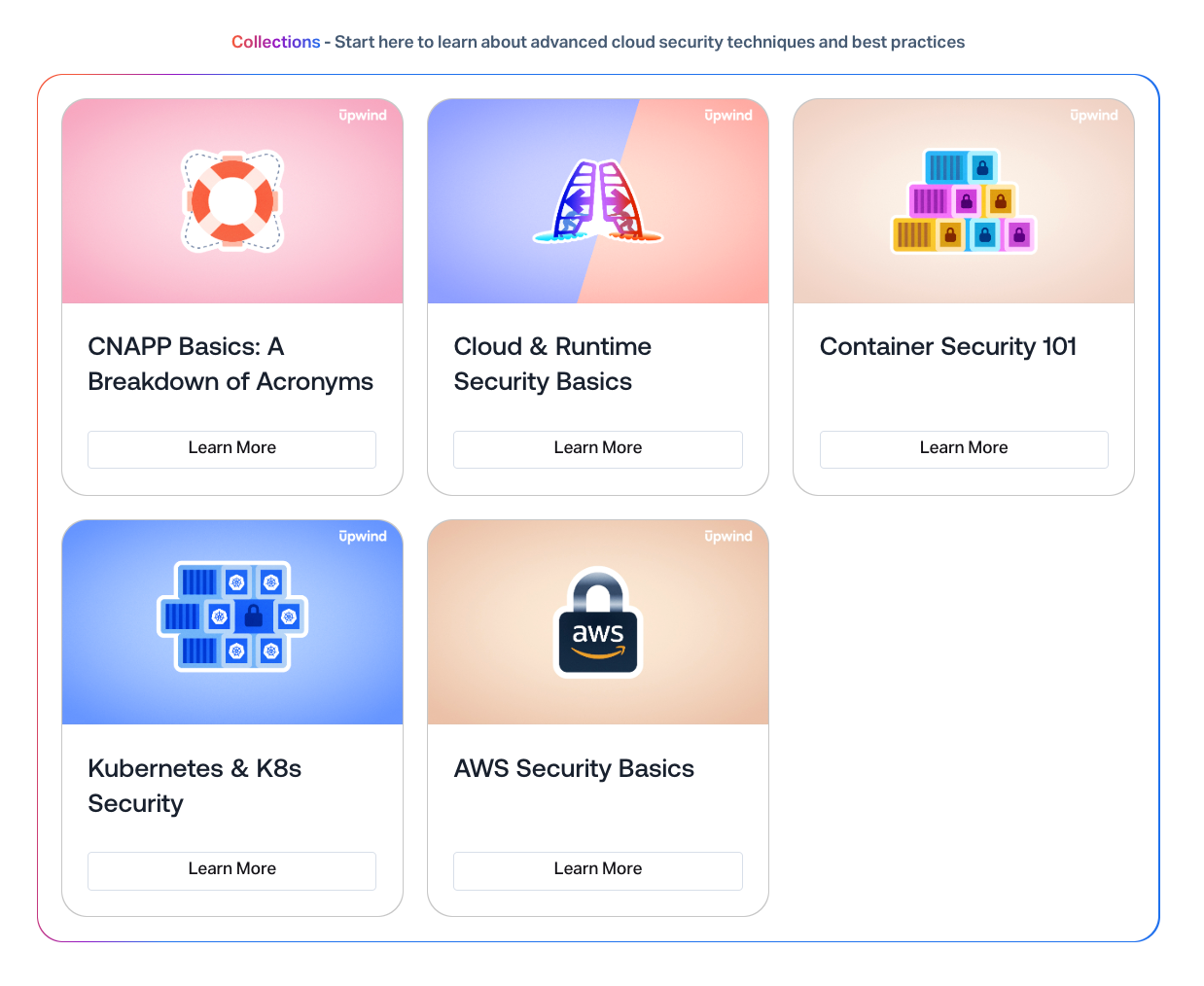
- Create readers’ “collections” that guide customers through the decision-making process by considering their own stacks and needs, rather than through a buffet of high-level, topical terms. WordPress categories remained topical to help Google crawlers understand the client’s expertise across core pillars.
What Should Every Website Glossary Entry Include?
The strongest glossary entries go beyond a generic definition. They combine a clear answer with context, experience, comparisons, and follow-up information that readers cannot get from a short AI summary.
| Element | What it adds |
|---|---|
| Tables and comparisons | Contextual blocks comparing and contrasting multiple terms |
| Case studies and examples | Experience elements that AI can’t touch |
| Expert quotes and interviews | True insight from product leaders and executives |
| Calculators and evaluation checklists | Useful tools for serious, thoughtful searchers happy to dig deeper |
| FAQs | Clarification of distinctions among other key terms |
A reusable website glossary entry template
- Generic definition: Start with a clean sentence that is easy to lift and quote.
- Meaning in context: Explain the term in the environment of your customers, with their usual industry, stack, size, and constraints.
- Decision questions and trade-offs: Address the follow-ups that make a reader leave an AI summary to look for nuance.
- Comparison or example: Add a table, case study, calculator, evaluation checklist, or contextual block comparing related terms.
- Expert perspective: Use quotes and explanations from product leaders, executives, interviews, and personal experience.
- Related-term FAQs: Clarify distinctions among other key terms and guide readers to the next useful entry.
How We Wrote Glossary Content for Humans and Robots
Apart from including planned elements like tables and interviews, how do you buckle down in the writing stage to craft content that’s in it for the long haul? Our primary approaches were:
- Write for context, not definition. Sure, it’s a glossary. But we wanted to get to the generic definition quickly, then spend time explaining what it meant in context: in the environment of our clients, with their usual constraints, for example, for CISOs facing typical problems. Our style guide borrowed not from the SEO competition, but from demos, client interviews, and CISO groups and Substacks. Keyword scores had to go hand in hand with audience optimization and writing directly to our human readers’ current situations.
- Triple down on your style guide, editing consistency, and using a single writer’s “voice” as much as possible. AI is sensitive to drifting definitions and logic that come from multiple voices and perspectives. A model may blend definitions or ignore your definitions entirely when you describe terms in different ways or offer up contradictions. So, start by making sure you have a clean sentence to lift and quote for important definitions across pages. This is a deviation from traditional SEO, where “ranking for more terms” might make slight differences in definitions desirable.
- Write for robots with consistency, snack-sized blocks, and clear, rather than clever, headers. Write for humans by nailing the follow-ups. Respect crawlers by emphasizing clear answers in chunks they can “lift” for their users. But recognize that the next steps for customers depend heavily on their own industry, stack, size, and constraints. AI engines tell their users, “It depends.” But websites can still win traffic by addressing follow-up questions with specific answers.
- Interview product leaders and executives. Opinions and thought leadership are more valuable than ever, and true insight is harder to come by. We amassed a bank of quotes and explanations from the client’s most renowned internal experts and used them to add depth and context to the glossary definitions.
- Leverage your humanity. I don’t trust arguments that come from pamphlets thrown out of airplanes, unattached to a writer, a thinker, or an authority. And neither should you. Use personal experience in your glossary, with examples and narratives that competitors and AI don’t have. Use “I” and “we” when you can. It’s called life experience. And it’s valuable.
How Do You Measure Website Glossary Performance?
Performance is a moving target in 2026. Glossary content was once a traffic golden goose, and that’s no longer the case. But is it time to double down on citation numbers? Not quite. We believe now is the time for:
- Splitting performance into traffic value and visibility value. It’s still important to track clicks and downstream site paths for terms that drive traffic. But it’s just as important to track impressions and share of SERP features, including AI snippets or presence, for terms where you’re increasingly “read on Google” but not on-site.
- Create a citation watchlist for measuring lift. Find out which queries trigger AI overviews, whether impressions are rising, whether clicks flatten, and whether branded search is rising with an increase in glossary exposure.
- Forget about last-click attribution. Instead, measure assisted buying behavior that goes beyond page-level traffic. Glossary pages still win when they increase follow-on behaviors, even when first interactions don’t include clicks.
What Would We Do Differently Today?
Our client, which initially hoped for content that spoke to a higher-level buyer than the competition, was caught in a Catch-22: traffic was clearly higher for more basic-level queries. Did they want to win traffic or woo the C-Suite?
Their answer: yes.
It’s one thing to say you’re solving for both traffic and nuance, but execution is another beast, and in the end, it’s hard to walk a tightrope of comprehensive knowledge for the C-Suite and Google traffic’s “basic info” dictates, with all the keywords your chosen query would like you to include.
The “do it all” approach led to lengthy, comprehensive pieces. While its bite-sized architecture and multiple sections, including FAQs, help it continue to perform, this isn’t what we preach about the future of SEO. In this case, the glossary’s future-proofing will come from:
- Monitoring all pages and doubling down on winners on a quarterly basis
- Keeping all pages fresh and updated, and in the future, possibly spinning individual entries off from a hub page
- Maintaining a content library that’s responsive to both SEO and AEO updates
The AEO future will mean more paring, more interlinking, and shorter content pages than this project’s style guide hit accurately.
But as shorter, multi-purpose content becomes the norm, even nuanced glossaries with great interviews, opinions, experience narratives, and comparison charts will have to package those elements in a lighter-weight format.
Website Glossary SEO and AEO Checklist
- Prioritize long-tail queries and cluster them by decision questions and trade-offs
- Treat AEO as a distribution channel and plan for “zero click” exposure
- Build engagement, comparison, and experience elements into each entry at the planning stage
- Get to the generic definition quickly, then explain what it means in context
- Use a consistent style guide, a single writer’s voice, and a clean sentence to lift and quote
- Write in snack-sized blocks with clear, rather than clever, headers
- Add expert quotes, interviews, tables, comparisons, calculators, evaluation checklists, and FAQs where they genuinely help
- Create readers’ collections and keep WordPress categories aligned to core topical pillars
- Measure both traffic value and visibility value
- Create a citation watchlist and track assisted buying behavior beyond last-click attribution
- Monitor every page, double down on winners quarterly, and keep the content library fresh
How to do it? That’s still the biggest AEO challenge we all face.
If you’re looking to create a glossary product in an era of AEO/GEO, let’s talk.




Leave a Reply